

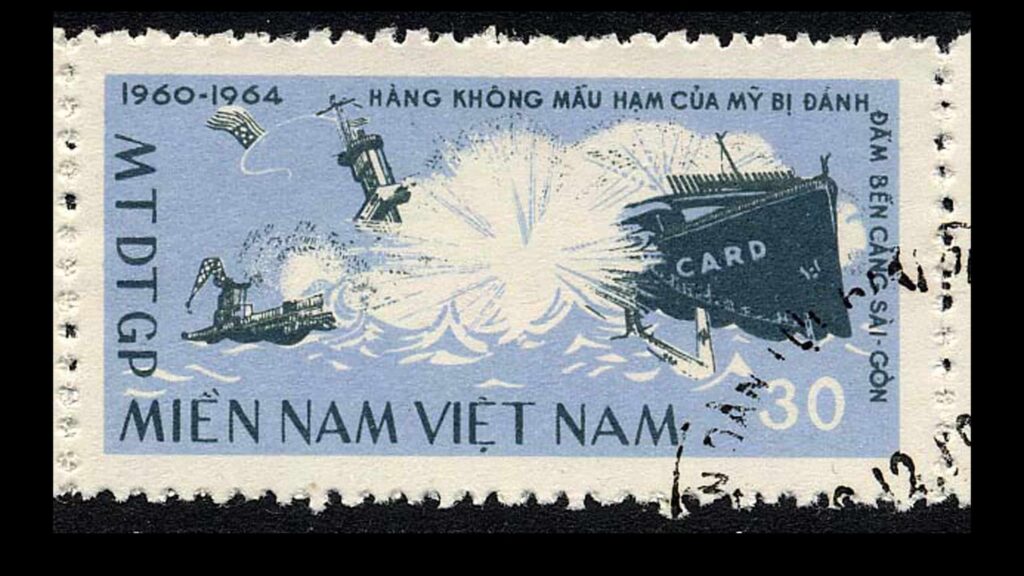
Imagine the chaos: it’s October 1965, and the mighty USS Independence, a 1,000-foot behemoth of American naval power displacing over 80,000 tons, is steaming off Vietnam’s coast, launching jets into the fray of Operation Rolling Thunder. Suddenly, from the murky depths of the South China Sea, a Viet Cong frogman—armed not with high-tech torpedoes but a pair of Soviet-supplied limpet mines and sheer audacity—latches onto the carrier’s hull. The blasts don’t sink her outright (she limps back for repairs), but they expose a brutal truth: even the most advanced warships are vulnerable to determined insurgents wielding asymmetric tools. This wasn’t some Hollywood myth; declassified reports and veteran accounts confirm the attack, a testament to how low-tech grit can bloody the nose of superpower might.
Dig deeper, and the parallels to today’s 2A debates scream for attention. The Viet Cong didn’t conquer through matching F-4 Phantoms with MiGs; they won hearts, minds, and battles by arming every farmer and fisherman with rifles, grenades, and improvised explosives—decentralized firepower that turned occupied rice paddies into kill zones. That frogman’s mines? Just an extension of the same philosophy: ordinary people, empowered with accessible arms, denying tyrants unchallenged dominance. Fast-forward to now, and anti-2A crusaders push the same failed playbook—disarm the populace while elites bunker down behind armored convoys. History whispers (okay, shouts): centralized control crumbles when the ruled fight back asymmetrically.
For the 2A community, this is rocket fuel for advocacy. The Independence incident underscores why the right to bear arms isn’t about hunting or sport—it’s the ultimate equalizer against overwhelming odds, whether it’s jungle divers or urban unrest. In an era of drone swarms and carrier strike groups, the humble AR-15 or concealed carry rig remains the frogman’s modern heir: simple, effective, and unstoppably democratic. Let the gun-grabbers clutch their pearls; we’ll keep curating these lessons, because forgetting Vietnam’s underdogs means inviting history’s repeat—with us on the wrong side of the waterline.


