
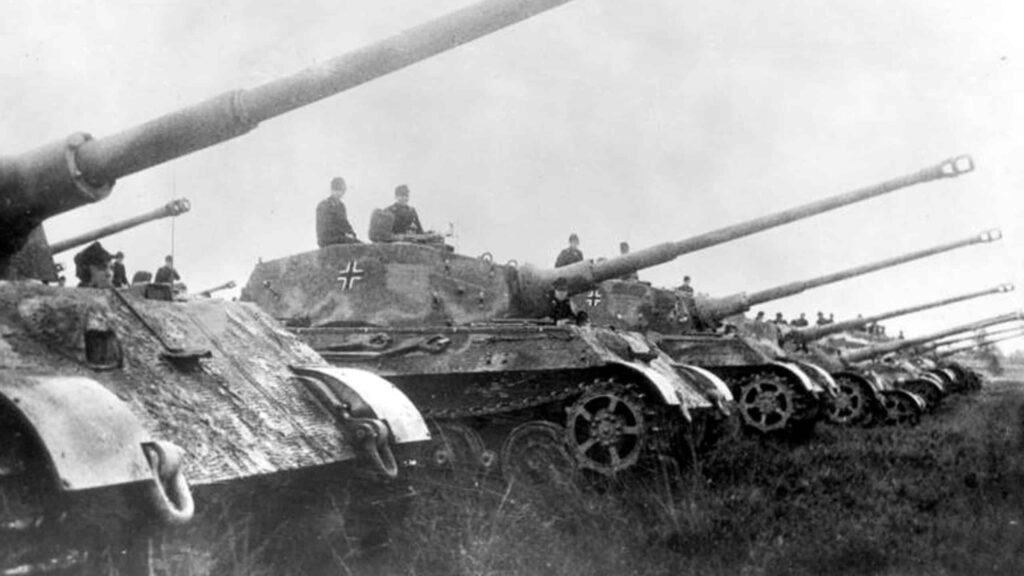
Imagine a 70-ton behemoth of steel, the German Tiger II tank—King Tiger to its fans—rolling across the battlefields of World War II, armed with an 88mm KwK 43 gun that could punch through any Allied armor at over 2 kilometers. Engineered as the ultimate defensive fortress on tracks, it embodied the paradox Eugene Nielsen brilliantly unpacks in his history article: a machine designed for impenetrable superiority that crumbled under its own weight. With sloped armor up to 185mm thick and a power-to-weight ratio that left it wheezing at 38 km/h on roads (and far less off them), the Tiger II was a tactical nightmare. Its massive Maybach engine guzzled fuel like a Panzer division at a beer hall, stranding crews in enemy territory, while narrow tracks dug into mud like snowshoes in a blizzard, immobilizing it during critical offensives like the Ardennes. Over 400 built, fewer than 100 survived the war—not from enemy fire alone, but from mechanical suicide.
Nielsen’s analysis cuts deeper, revealing how the Tiger II’s fatal flaws stemmed from over-reliance on heavy armor and big guns at the expense of mobility and reliability, a lesson echoing through military history from the Maginot Line to modern urban warfare. Contextually, it was Hitler’s desperate bid for a wonder weapon amid resource shortages, forcing compromises like underpowered final drives that snapped under torque. For the 2A community, this is pure gold: just as the Tiger II proved that no amount of superior engineering trumps practical logistics and adaptability, bloated gun control schemes—like New York’s SAFE Act or California’s assault weapon bans—create heavy tanks of regulation that immobilize self-defense without stopping crime. Real-world data from the FBI’s Uniform Crime Reports shows violent crime persists in high-restriction states, much like Shermans outmaneuvered Tigers through speed and numbers.
The implications? Embrace the 2A ethos of lightweight, reliable tools—think AR-15 platforms over hypothetical Tiger rifles. Nielsen’s piece reminds us that true security comes from agile, field-proven designs, not bureaucratic behemoths. Gun owners, take note: mobility beats mass every time, whether dodging bocage hedgerows or bureaucratic red tape. Dive into the full article for the gritty details—it’s a masterclass in why overbuilt defenses fail.


