
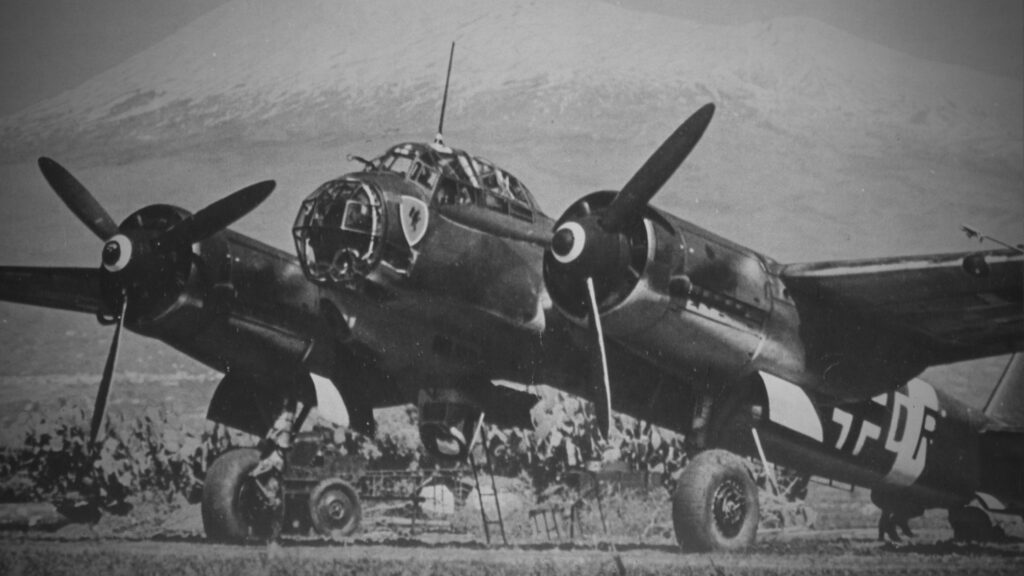
The Junkers Ju 88 was a beast of the skies during World War II, earning its stripes as Nazi Germany’s most versatile aircraft—a bomber, dive bomber, night fighter, reconnaissance platform, even a torpedo bomber and pathfinder. With over 15,000 produced from 1939 to 1945, it punched way above its weight class thanks to its sleek all-metal airframe, twin Jumo engines pushing 1,300 horsepower each, and a payload capacity that let it haul up to 6,600 pounds of bombs or pack four 20mm cannons for strafing runs. It terrorized Allied shipping in the Battle of the Atlantic, shredded convoys from the Blitz to Stalingrad, and adapted to every desperate pivot the Luftwaffe threw at it. What made it shine? Junkers’ genius in blending speed (topping 300 mph), range (over 1,000 miles), and survivability—defensive armament evolved from a single machine gun to a full turret setup, keeping it relevant even as Allied tech surged ahead.
Dig deeper, and the Ju 88’s story is a masterclass in engineering pragmatism amid total war, where one airframe’s modularity outfoxed rigid production lines. Unlike the specialized Lancaster or B-17, the Ju 88’s nose could swap from glazed greenhouse for bombing to solid radome for radar-equipped night fighting, embodying the universal combat aircraft ethos that let Germany squeeze versatility from dwindling resources. It wasn’t invincible—Allied fighters like the Spitfire whittled it down by 1943—but its adaptability foreshadowed modern multi-role jets like the F-35, proving that flexibility trumps specialization when the chips are down.
For the 2A community, the Ju 88 is a stark airborne parallel to the modular AR-15 platform: a base design infinitely customizable for mission-specific roles, from varmint plinking to home defense, without needing a factory overhaul. Just as Junkers iterated with field kits—adding rocket pods or drop tanks—so too do we slap on optics, suppressors, or braces, turning one rifle into a do-it-all defender. In an era of tyrannical overreach threatening standardization (think ATF pistol brace bans), the Ju 88 reminds us why versatility is the ultimate check on centralized control: when governments demand specialized tools they can regulate, our Swiss Army knife of self-defense ensures we’re never outgunned or outmaneuvered. History’s lesson? Build adaptable, stay sovereign.


