
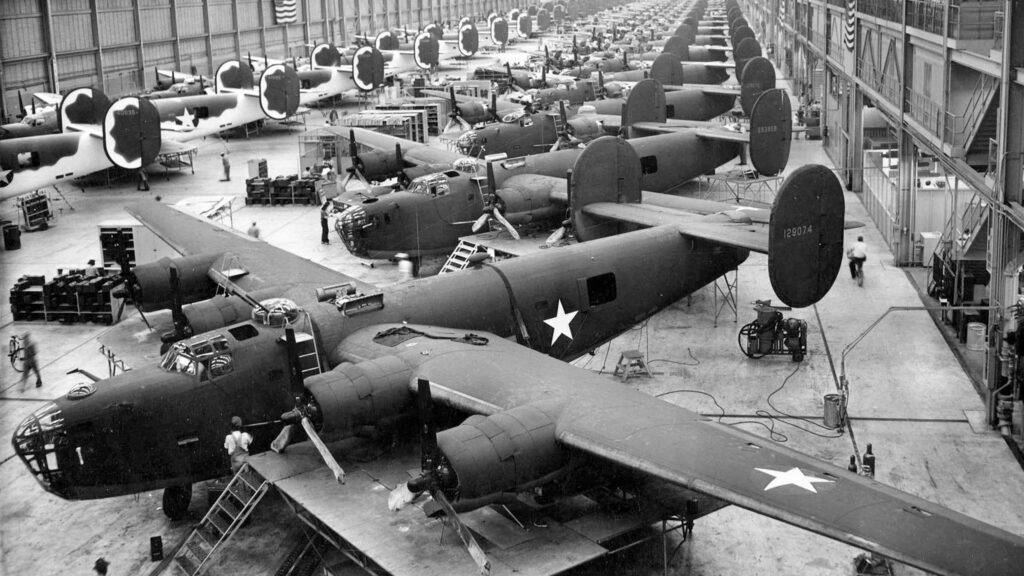
weren’t just flying fortresses of steel and firepower—they were the ultimate expression of American ingenuity, armed to the teeth with .50 caliber machine guns that shredded enemy fighters and turned the skies into no-fly zones for the Axis powers. Picture the B-17 Flying Fortress, bristling with up to 13 Browning M2 heavy machine guns, each capable of firing 600 rounds per minute, or the B-29 Superfortress that firebombed Japan into submission with payloads that included experimental gun turrets synced for devastating crossfire. These beasts didn’t win the war through bombs alone; their defensive armament, rooted in the same semi-automatic and full-auto principles we cherish today, allowed crews to defend themselves against overwhelming odds, much like the armed citizen stands ready against tyrants. Richard Johnson’s piece dives into the gritty details of these aerial warriors, from the Norden bombsight controversies to the brutal Pacific theater runs, reminding us that America’s victories were forged by men wielding the tools of liberty.
Delve deeper, and the parallels to the Second Amendment are uncanny: just as those bombers embodied the right to bear arms on a national scale—protecting freedom from aerial invasion—so does 2A empower individuals to safeguard their homes and communities from domestic threats. The .50 BMG, vilified by gun-grabbers today as some mythical anti-material boogeyman, was the B-17’s backbone, punching through Zeros at 2,000 yards and proving that big-bore firepower deters aggression like nothing else. Johnson’s history lesson underscores a timeless truth: disarm a nation, and you invite conquest; arm it robustly, and empires crumble. In an era of endless wars and eroding rights, this WWII saga is a rallying cry for the 2A community—our forebears didn’t liberate the world with harsh language or common-sense restrictions; they did it with unchecked ballistic supremacy.
The implications? Politicians pushing assault weapon bans or .50 cal registries are echoing the same failed disarmament logic that left Europe defenseless before blitzkriegs. Curating this story isn’t just nostalgia; it’s a strategic reminder that the guns on those bombers trace their lineage straight to the AR-15 in your safe, both born from the unyielding American spirit of self-reliance. As Johnson chronicles, when the chips were down, it was firepower—not diplomacy—that turned the tide. 2A patriots, take note: history demands we keep that legacy loaded and legal.


