
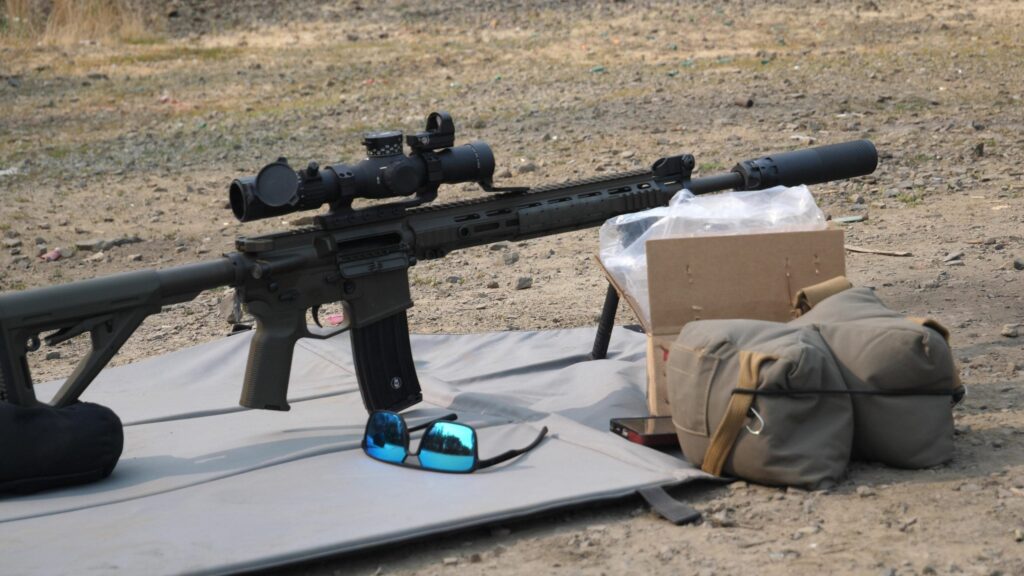
You’ve probably seen plenty of builds that feature a partially or fully tucked or recessed suppressor—where the can is pushed back into the host barrel, shortening the overall length while maintaining that whisper-quiet performance. But why bother? It’s not just aesthetics; tucking a suppressor is a tactical masterstroke for AR builders chasing compactness without sacrificing NFA compliance or zeroing their optic. In a world where door-kicking drills demand maneuverability and home-defense rifles need to navigate tight hallways, recessing that suppressor by a few inches can transform a bulky 16-inch SBR setup into something that handles like a pistol brace dream—legally, of course, post-ATF clarifications. The key when hits during assembly: measure your barrel’s shoulder-to-muzzle length against the suppressor’s internal bore diameter, ensuring at least one full caliber of freebore to avoid baffle strikes. Tools like direct-thread mounts or taper adapters make it foolproof, and brands like Dead Air or SilencerCo have optimized Nomex-wrapped cans for this exact play.
Diving deeper, this trend underscores a seismic shift in the 2A ecosystem: suppressors aren’t fringe anymore—they’re mainstream tools for hearing-safe training and precision shooting, with the HPA languishing in Congress despite overwhelming public support (80%+ approval in polls). Tucking amplifies their utility, countering anti-gun narratives that paint them as silencers for criminals by highlighting practical, everyday benefits like reduced signature in competitive 3-gun or hunting blinds. For the community, it’s a reminder to prioritize builds that maximize suppressors’ pros—weight forward for stability, minimal POI shift—while dodging regulatory pitfalls like constructive possession. Imagine the implications if SHOT Show floors overflow with tucked hybrids: it normalizes hearing protection as a right, not a privilege, pressuring lawmakers to unshackle the NFA tax stamp backlog.
Bottom line, if you’re assembling your next duty rig, tuck it. It’s low-risk engineering that boosts controllability, fits more cans on shorter barrels (hello, 10.5-inch uppers), and future-proofs your platform against evolving brace rules or potential brace bans. Pair it with a quality direct impingement or piston host, and you’re not just building—you’re evolving the suppressed rifle conversation, one recessed thread at a time. Check the source for build specifics, then hit the range and feel the difference. 2A wins when we innovate smarter.


