

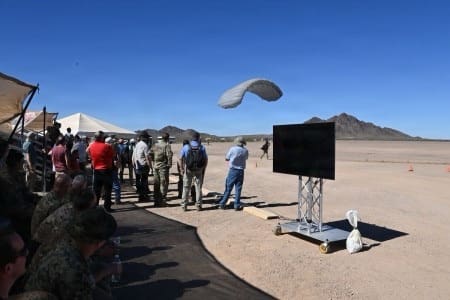
Imagine hurtling pallets of precision-guided munitions, heavy machine guns, and squad-level firepower from the skies right into the heart of a contested battlefield—landing exactly where they’re needed, when they’re needed, without a single boot on the ground risking exposure. That’s the jaw-dropping reality showcased at the U.S. Army’s Yuma Proving Ground last March, where the Yuma Test Center rolled out the latest airdrop wizardry from DEVCOM Soldier Center. For a full week, engineers and brass put these systems through their paces in the brutal Arizona desert, demoing tech that can drop everything from lightweight resupply kits to armored vehicles with pinpoint accuracy, even in high winds or GPS-denied environments. We’re talking Joint Precision Airdrop Systems (JPADS) evolved into next-gen beasts, using AI-driven guidance, steerable parachutes, and real-time telemetry to hit targets within meters.
This isn’t just some lab experiment; it’s a game-changer for rapid force projection, ensuring frontline troops get ammo, optics, and suppressors faster than ever—think M240s and belt-fed glory raining down autonomously. From a 2A perspective, it’s a stark reminder of why civilian access to military-grade innovation matters: the same tech trickle-down that gave us red dots, suppressors, and modular rifles stems from these proving grounds. As the Army refines autonomous delivery to outpace peer adversaries like China, watch for spillover into commercial drone drops and precision hunting gear—empowering responsible armed citizens with tools once reserved for spec ops. Uncle Sam’s investment here bolsters national defense while indirectly fueling the ingenuity that keeps our Second Amendment edge sharp; after all, a well-supplied defender is the best deterrent. Stay vigilant—these demos signal a future where firepower flows freer than ever.


