

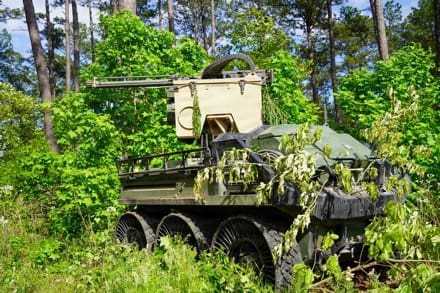
The US Army’s push for an unmanned ground vehicle (UGV) to handle the last tactical mile isn’t just another sci-fi gadget—it’s a game-changer for how infantry platoons and companies operate in the chaos of combat. Through the Capability Program Executive (CPE) Mission Autonomy, the Army wants a robot that autonomously delivers ammo, batteries, and other critical supplies right to the front lines, while also evacuating the wounded without risking more lives. Picture this: no more humping heavy rucksacks through kill zones or exposing medics to enemy fire. It’s the evolution of logistics in maneuver warfare, bridging the gap between rear-echelon support and the tip of the spear, much like how drones have already transformed the skies.
But let’s zoom out for some clever context—this UGV frenzy ties directly into the Pentagon’s Joint All-Domain Command and Control (JADC2) vision, where AI-driven autonomy reduces the human footprint in high-risk ops. We’ve seen prototypes like the Army’s Robotic Combat Vehicle (RCV) and Squad Multipurpose Equipment Transport (SMET) lay the groundwork, but this last tactical mile focus sharpens the blade for close-quarters battles. Implications? Battlefield lethality skyrockets as units stay fueled and fighting longer, with fewer casualties. For the 2A community, it’s a stark reminder of the tech arms race: while feds pour billions into autonomous warriors, civilian innovators are building similar UGVs for ranch security, disaster response, and yes, personal defense. Think Ghost Robotics’ Vision 60 or open-source projects—pro-2A folks can adapt these for armed overwatch on private land, turning military trickle-down into a force multiplier for the armed citizen.
The real 2A angle? As Uncle Sam fields tireless robo-mules that dodge IEDs and return fire (future iterations will), it underscores why the right to keep and bear arms isn’t obsolete—it’s essential. Governments don’t deploy robots to babysit; they do it to win wars efficiently. Law-abiding Americans, take note: mirroring this autonomy with civilian tech (drones, remote sentries) bolsters self-reliance against threats, from urban riots to rural invasions. Stay vigilant, innovate, and vote for policies that keep these advancements accessible—because the last tactical mile at home might just be your driveway.


