
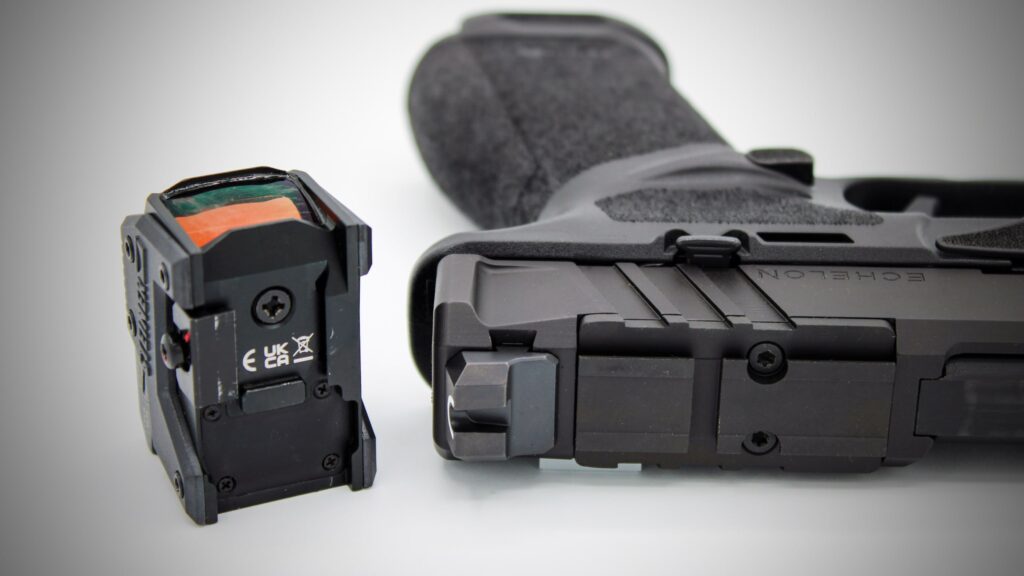
Pistol red dots have exploded in popularity among defensive shooters, turning what was once a rifle optic trend into an everyday carry essential—but there’s a catch that’s tripped up more than a few gun owners: footprints. Cory Ross’s latest gear breakdown dives deep into these mounting patterns, decoding the alphabet soup of standards like RMR, DeltaPoint Pro, Holosun 407K/507K, and the emerging Docter footprint. It’s not just nerdy trivia; mismatched footprints mean hours wasted on adapter plates, custom milling, or worse, a loose optic that fails when you need it most. Ross smartly breaks it down with visuals and compatibility charts, highlighting how the pistol market’s fragmentation mirrors the AR-15 rail system’s early chaos—everyone innovating, but without universal standards, you’re left playing Jenga with your slide.
What makes this essential reading for the 2A community? Context is king: as states like California tighten slide-milling regs and more OEMs (Glock, Sig, Staccato) ship factory-cut optics-ready pistols, understanding footprints empowers you to future-proof your build without relying on gunsmith roulette. Ross points out clever workarounds like the Trijicon RMRcc’s compact footprint bridging full-size and micro red dots, or Holosun’s K-series dominating budget builds with near-universal adapters. Implications? It democratizes high-end sighting systems—pair a $300 Holosun on your carry Glock without $200 in plates—and levels the playing field against anti-2A narratives painting red dots as tactical gimmicks. Savvy shooters save cash, shave weight, and boost reliability, turning potential malfunctions into split-second advantages.
Bottom line: if you’re milling your slide or upgrading that Gen5, bookmark Ross’s guide before dropping dough. It’s a pro-2A power move—knowledge as the ultimate force multiplier, ensuring your pistol’s optic mates perfectly so you stay locked in, not locked out. Dive in, build smart, and keep defending the right.


