
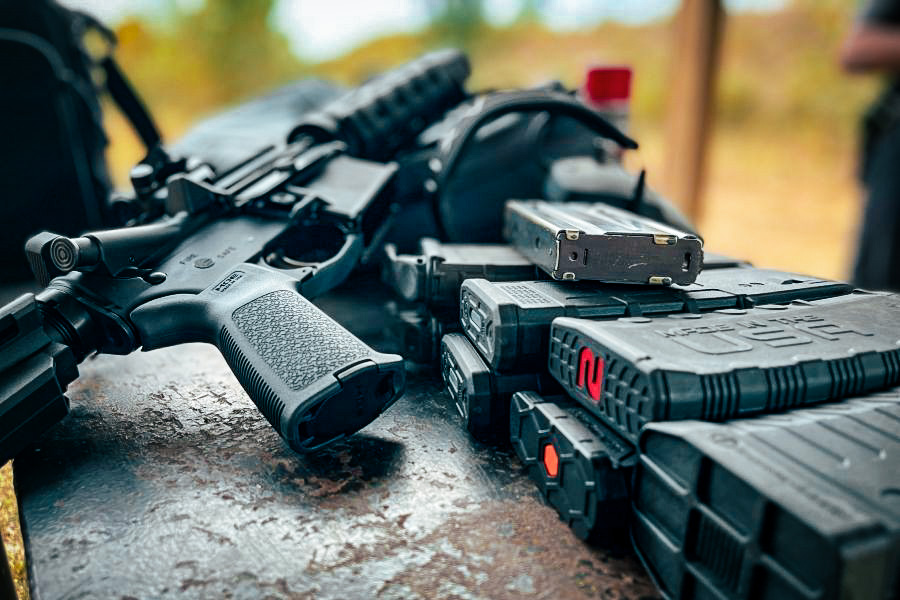
The Supreme Court’s decade-long hesitation on so-called hardware cases—challenges to assault weapon bans, magazine capacity limits, and other popular firearm restrictions—has left gun owners in a precarious limbo, paying the price with eroded rights and emboldened anti-2A regimes. Back in 2015, as the source text astutely notes, a 5-4 Court led by the unpredictable Justice Kennedy was unlikely to push beyond the foundational Heller decision, which affirmed an individual right to keep and bear arms but deliberately punted on specifics like bearable arms in public or modern semi-automatics. Instead of clarifying the Second Amendment’s scope, SCOTUS dodged cases like Friedman v. Highland Park (striking down an Illinois AWB) and Peruta v. San Diego (on concealed carry), leaving lower courts to twist Heller’s common use test into pretzels. This dithering wasn’t just caution; it was a strategic retreat that handed progressive circuits free rein to uphold bans on AR-15s, standard 30-round magazines, and even thumbhole stocks under flimsy interest-balancing schemes.
Fast-forward to today, and the cost to the 2A community is staggering: over 10 million law-abiding Americans in states like California, New York, and Illinois are disarmed of their preferred defensive tools, while black-market premiums skyrocket and compliance burdens crush small FFLs. Bruen’s 2022 triumph finally imposed a text, history, and tradition test, vaporizing post-Heller levels of scrutiny nonsense, but the Court’s prior inaction allowed a patchwork of tyranny to entrench—think Maryland’s post-Bruen AWB still standing amid endless litigation. For gun owners, this means not just lost hardware, but a chilling effect on manufacturing innovation and a bloated legal war chest diverted from proactive fights. The silver lining? With a solidified 6-3 conservative majority, cases like Rahimi (recently narrowing domestic violence restrictions) signal momentum; expect hardware showdowns like Bianchi v. Frosh to force SCOTUS’s hand soon, potentially restoring the full spectrum of bearable arms.
The implications scream urgency for the 2A faithful: lobby hard for cert grants, support amicus blitzes from GOA and FPC, and stock up while you can—because a decade of dithering has taught us that judicial timidity is the real public safety threat. If SCOTUS finally confronts these bans head-on, it could dismantle the most egregious infringements overnight, vindicating Heller’s promise and turbocharging the industry. Until then, vigilance isn’t optional; it’s the magazine that keeps our rights loaded.


