
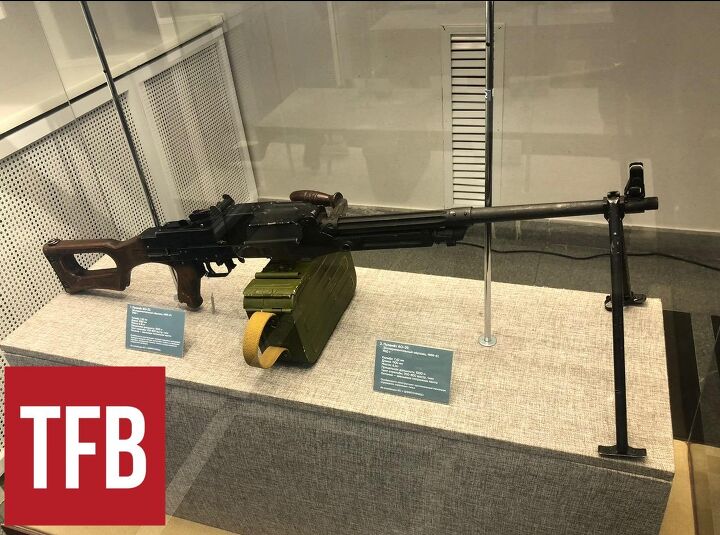
In the early 1960s, the Soviet military stared down a logistical and tactical puzzle that still echoes in today’s firearms debates: their shiny new Kalashnikov PK general-purpose machine gun (GPMG) was a logistics dream, standardizing ammo and parts across units like a communist IKEA flatpack. But as squads hauled it into the field, reality bit hard—the PK was a beast at over 16 pounds unloaded, fine for fixed positions but a backbreaker for every infantryman expected to lug it on patrols, vehicles, or assaults. Enter the AO-29, a wild Soviet fever dream from the experimental Abakan-era designers at TsKIB SOO, clocking in at a featherweight 5.5 kg (12 lbs) with a futuristic bullpup layout, belt-fed 5.45x39mm, and a quick-change barrel that screamed multi-role mastery. It wasn’t just lighter; it flipped the script with a top-mounted feed for prone shooting, integrated bipod, and insane rates of fire up to 900 rpm, all while keeping recoil tame via a long-recoil system borrowed from artillery tech.
What makes the AO-29 a buried treasure for 2A enthusiasts? This wasn’t some incremental tweak—it was the Soviets admitting their own universal gun fell short, pushing boundaries toward what we’d now call a squad automatic weapon (SAW) on steroids, years before the U.S. M249 or even modern 6.8x43mm contenders. Prototyped in 1966 but shelved by 1970 amid brass favoring the reliable-if-heavy PK, the AO-29 highlights a timeless truth: no single gun rules all roles. Imagine if it had won out—Soviet squads zipping with ultra-portable fire support, forcing NATO to counter with lighter M60 evolutions or early Minimis. For American gun owners, it’s a pro-2A rallying cry: innovation thrives in free markets, not state edicts. The PK’s lineage lives on in the PKM and even influences like the FN MAG, but the AO-29 whispers what if, urging us to demand versatile, lightweight belt-feds in calibers like 6.5 Creedmoor or 6.8×51 for civilian marksmen, hunters, and yes, defensive squads.
The implications ripple into today’s AR-10 belts and belt-fed builds: why settle for 20-pound doorstops when home-shop wizards craft 10-pound 5.56 SAWs? The AO-29’s failure—killed by bureaucracy, not flaws—reminds us that Second Amendment freedoms let us resurrect these ideas. Print a lower, slap on a belt-feed upper, and you’re channeling Soviet ingenuity without the gulag. Dig into declassified docs or replicas (rare, but floating in Eastern Euro circles), and you’ll see why curating lost prototypes like this fuels the fire for unbound innovation—because in the gun world, lighter, faster, and freer always wins.


