
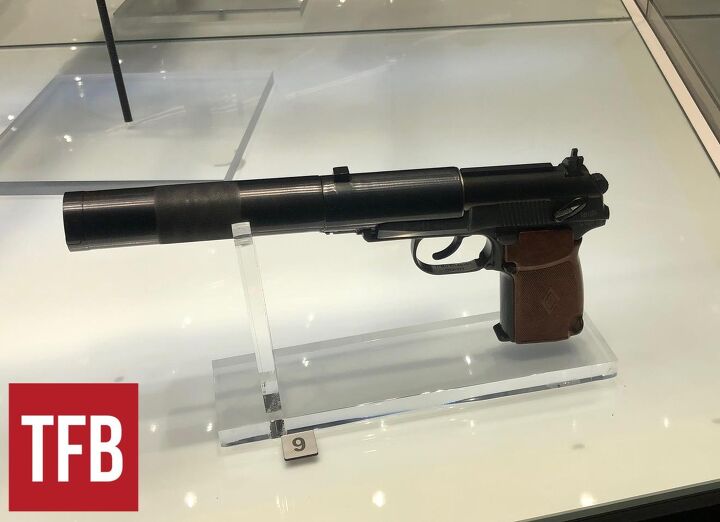
In the shadowy corridors of Cold War espionage, where silence was survival, the Soviet Union birthed a pistol that whispered death: the PB, or 6P9 in GRAU nomenclature. Born in the mid-1960s from the urgent needs of Spetsnaz reconnaissance teams and KGB wetwork specialists, this wasn’t your grandpa’s Nagant revolver—it was a purpose-built suppressed handgun, integral baffle design and all, chambered in the subsonic 9x18mm Makarov round for near-silent operation. Adopted in 1967, the PB stripped down the reliable PM Makarov platform, shedding weight to a featherlight 0.94 lbs unloaded while maintaining 8+1 capacity and pinpoint accuracy out to 50 meters. No external suppressor to snag or lose; the hush was baked in, making it the ultimate tool for quiet professionals operating behind NATO lines, where a single unsuppressed pop could summon an armored division.
What elevates the PB from Cold War curiosity to 2A legend is its engineering elegance—a testament to why integrated suppressors aren’t just accessories but force multipliers. The Soviets, ever pragmatic, prioritized concealability and reliability over flash, producing over 100,000 units without the bureaucratic red tape that plagues modern American suppressor ownership via the NFA. Fast-forward to today: as ATF wait times drag into a year and $200 taxes sting, the PB reminds us of the absurdity. States like Colorado and New York ban or heavily restrict these silencers, yet history proves suppressed firearms save hearing, reduce recoil, and enhance precision—benefits echoed in U.S. military adoption of the HK416A5 with SIG SRD762. For the 2A community, the PB is a rallying cry: hear no evil, speak no evil, but arm thyself quietly. Suppressors aren’t sneaky; they’re smart, and the Kremlin’s quiet hand exposes how far we’ve strayed from practical self-defense.
The implications burn bright for pro-2A advocates pushing Hear Protection Act revivals or state nullification. Imagine PB-inspired designs flooding civilian markets—compact, reliable, and legal without a Form 4 odyssey. As China and Russia evolve their suppressed tech (think modernized PB analogs in Ukraine’s meat grinder), America’s innovation edge dulls under regulation. Time to dust off the Makarov blueprints, 3D-print some baffles, and remind bureaucrats: the right to quiet arms isn’t negotiable. The PB didn’t just serve the Rodina; it schooled the world on why Second Amendment tech should flow freely.


