
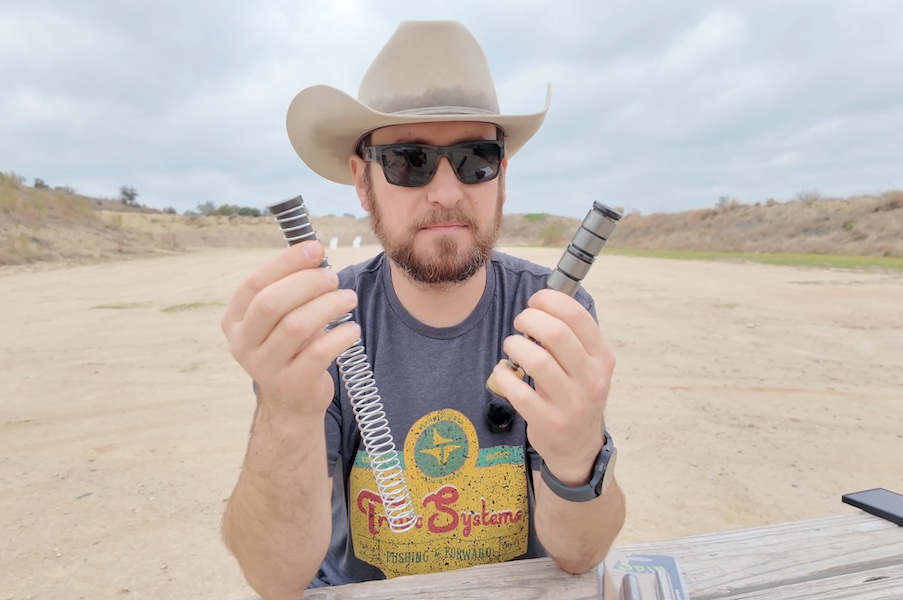
If you’ve slapped a suppressor on your AR-15 or AR-10 and suddenly it’s acting like a finicky date—short-stroking, ejecting brass like confetti, or failing to cycle reliably—you’re not alone. Suppressors add backpressure that over-gasses your rifle, turning a smooth-shooting black rifle into a gas-huffing mess. The knee-jerk fix is an adjustable gas block (AGB), but what if you’re running a standard carbine or mid-length setup without one? A fresh video from the suppressor savants at [Silencer Central](https://youtu.be/7YYSiHR39-M?si=Y9nLs0_HK83ammyo) drops real-world gold: Silencer 101: How to Tune Your Suppressed AR Rifle Without an Adjustable Gas Block. They walk through battle-tested tweaks that get your rig humming without dropping extra cash on aftermarket parts.
Here’s the clever breakdown—they zero in on three no-drama solutions that exploit your rifle’s existing anatomy. First, swap to an heavier buffer (H2 or H3) and a flat-wire spring to soak up that extra gas energy, preventing over-speed bolt carrier groups from beating your brass into oblivion. Second, drill out your gas port slightly (they guide you on safe measurements to avoid going full race-gun) for balanced flow without grenading reliability. Third, upgrade to a heavier bolt carrier group (like a JP or Toolcraft nitride) to tame recoil impulse. It’s not voodoo; it’s physics—reducing dwell time and mass to match suppressed pressures. Watch them demo it on a bone-stock AR, proving these hacks work on budget builds, not just high-dollar customs.
For the 2A community, this is a game-changer amid the endless suppressor reform push (shoutout to the Hearing Protection Act’s ghosts). It empowers everyday defenders to optimize without bureaucracy or big spends, keeping suppressed SBRs legal and lethal-ready. No more excuses for unreliable home-defense guns—tune it right, train hard, and stay ahead of the curve. Pro tip: Test with your specific can (Huxwrx, Dead Air, whatever floats your boat) since backpressure varies. Your AR thanks you.


