
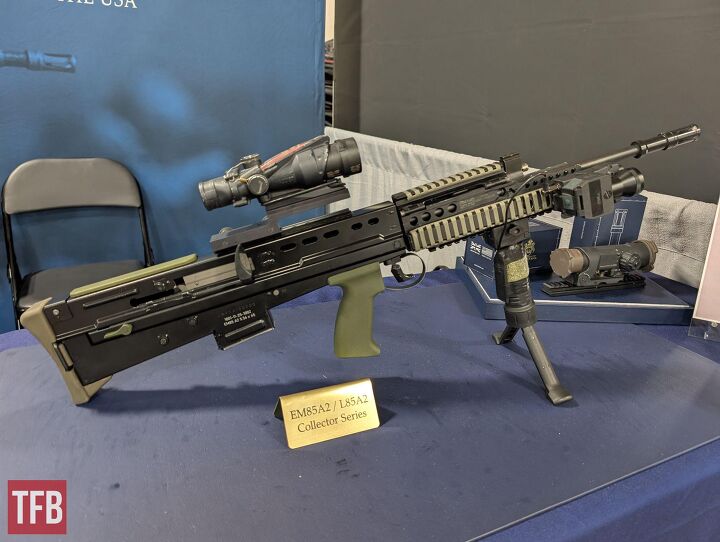
If SHOT Show 2026 will be remembered for anything in the firearms world, it’s the explosion of clones—those meticulously engineered replicas of iconic designs that have long tantalized 2A enthusiasts with promises of affordability, reliability, and that elusive perfection the originals sometimes lacked. While suppressors stole headlines thanks to streamlined NFA reforms opening the floodgates for new players, the real story unfolded in booths packed with M4/AR-15 pattern rifles mimicking everything from the HK416 to the SCAR-L, AKs aping the vaunted Russian classics, and even precision 1911s channeling pre-WWII Colts. We’re talking top-tier contenders like the LWRCI IC-A5 clone (now with enhanced DI reliability at half the price), Primary Machine’s PMAG-fed Beryl homage that’s turning heads for its Eastern Bloc ergonomics, and Sons of Liberty Gun Works’ SBR-ready M4 variant that’s basically a PSA GF3 on steroids but built like a tank. These weren’t cheap knockoffs; they were evolutions, blending modern materials, ambidextrous controls, and sub-MOA barrels into packages that democratize high-end performance.
What makes this Year of the Clone a watershed moment for the 2A community? It’s the ultimate market correction against legacy gatekeepers who’ve priced out the everyman shooter. Think about it: clones have slashed barriers to entry, with quality builds now hovering around $800-1,200 versus the $3,000+ originals, fueling a renaissance in training, competition, and home defense builds. This proliferation empowers customization—pair a Geissele-clone trigger with a Huxwrx suppressor-ready muzzle device, and you’ve got a rig that outperforms mil-spec gear without the FDE hype tax. For the community, it’s a double-edged sword: innovation accelerates as competition heats up, but it risks oversaturation, potentially commoditizing designs and pressuring smaller makers. Yet, in a post-NFA landscape, clones signal maturity—proving the industry can thrive on merit, not mystique, and handing power back to consumers who demand good enough that’s actually elite.
Looking ahead, expect clones to reshape the 2A ecosystem, from budget-friendly entry points for new shooters to modular platforms dominating 3-gun circuits. If 2026 cements this trend, we’ll see fewer one-and-done hype drops and more iterative perfection, benefiting everyone from casual plinkers to serious patriots. The implication? The Second Amendment isn’t just about owning guns; it’s about owning the means to replicate and refine them, ensuring no government or manufacturer holds a monopoly on freedom’s tools. SHOT 2026 wasn’t just a show—it was a clone army assembling for the long haul.


