
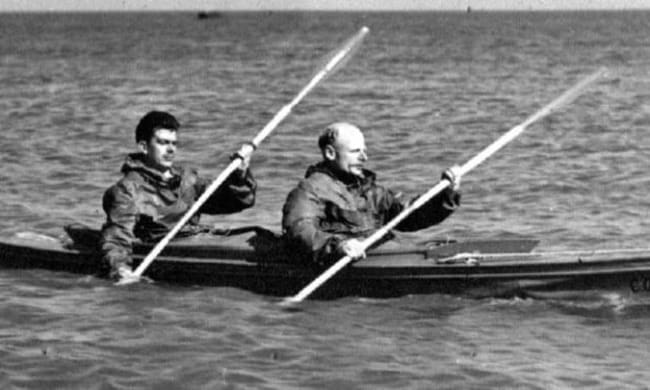
The use of kayaks or canoes more broadly for military operations is nearly as old as the craft themselves. Inland and coastal waterways have served as arteries of commerce, migration, and conflict since antiquity. From Viking longships slicing through fjords to raid coastal villages, to Native American war canoes ambushing European settlers along riverine frontiers, these lightweight vessels have always embodied stealthy mobility—perfect for hit-and-run tactics where silence is the ultimate weapon. Fast-forward to modern special operations, and kayaks remain a staple in elite units like the U.S. Navy SEALs or British SBS. Think Operation Neptune Spear, where bin Laden’s compound was approached via water insertions; while not always kayaks, the principle holds: folding kayaks like the Klepper Aerius or rigid inflatables allow operators to ghost past radar, evade patrols, and insert with minimal footprint. It’s a lineage of quiet lethality, proving that in an age of drones and hypersonics, low-tech ingenuity still rules asymmetric warfare.
What elevates this from historical footnote to 2A revelation is the parallel to civilian self-reliance. Just as spec-ops teams shun noisy motors for paddle power to maintain operational security, armed citizens understand that waterways—rivers, lakes, bayous—offer concealed avenues for evasion, resupply, or defense when roads are choked or compromised. Imagine SHTF scenarios: bugging out via kayak with your AR-15 slung low, AR mags in waterproof pouches, sidestepping checkpoints or looters who can’t hear you coming. This isn’t fantasy; it’s echoed in training manuals from the OSS in WWII to today’s SOF kayaking quals, where paddlers drill room-clearing from watercraft. For the 2A community, it’s a reminder that the right to bear arms extends to the tools of mobility—Second Amendment protections should fiercely guard against regs on assault kayaks or paddle-mounted suppressors, lest bureaucrats paddle us into vulnerability.
The implications ripple outward: as urban density rises and rural backwaters become strategic assets, mastering quiet water ops democratizes spec-ops edge for patriots. Outfit your kayak with modular rails for long guns, integrate comms in dry bags, and you’re not just recreating Rambo—you’re honoring a tactical continuum from antiquity to tomorrow’s contingencies. Pro-2A advocates, take note: push for waterway access rights as fiercely as range time. In a world of loud politics, sometimes the quietest approach wins.


