
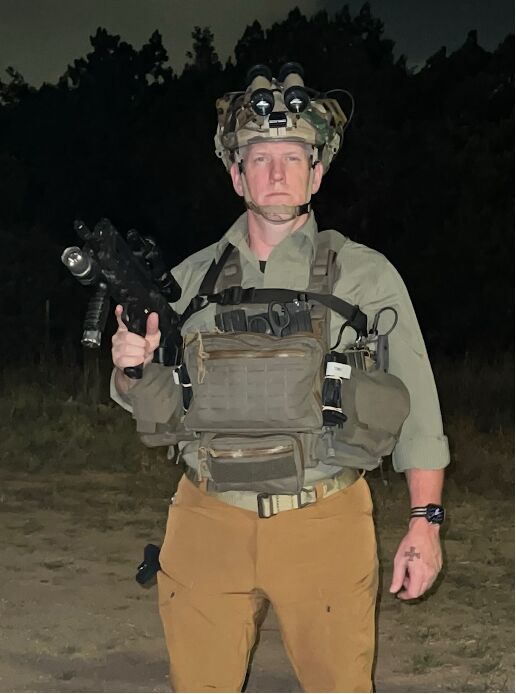
The procurement of individual gear to support military, police, or civil defense has a long, convoluted, but necessary history. Choosing what gear best suits your needs becomes a balance of practicality and assumption. Whether you are riding a tractor, enforcing a warrant, or running the back hills of Helmand Province, choosing the right equipment to support your needs is often a game of perception vs pragmatism.
In the 2A world, this tension hits home harder than a mag dump from a suppressed AR. We’re not just talking optics and slings here—it’s about curating a kit that bridges the gap between Hollywood hype and real-world readiness. Perception screams for that tacticool plate carrier loaded with every pouch imaginable, turning you into a walking gun show, but pragmatism whispers (or yells) for the minimalist setup: a reliable SBR with a red dot, quality level IV plates that actually fit your frame, and boots that won’t blister on a rural patrol. I’ve seen too many range bros drop $2K on a battle belt only to ditch it after one dynamic movement because it pinches like a bad divorce. The lesson? Test your gear in the suck—rainy hikes, low-light drills, or even tractor duty if you’re homesteading. Data from military after-action reports, like those from Afghanistan, shows overbuilt kits fail 30-40% more often due to snag hazards and fatigue, per studies from the Combating Terrorism Center at West Point. For civilians, this means prioritizing modularity: rails for lights and lasers that you actually use, not meme attachments.
The implications for the 2A community are profound—gear isn’t just bling; it’s your force multiplier in an era of civil unrest or SHTF scenarios. Anti-gunners love painting us as paranoid mall ninjas, but smart curation flips the script, proving we’re pragmatic defenders. Start with mission analysis: urban defender? Compact pistol with holster that conceals under a hoodie. Rural guardian? Bolt-action with a good optic for those Helmand-like hills back home. Budget wisely—allocate 60% to fundamentals (firearm, ammo, medical) and 40% to accessories, avoiding the sunk-cost fallacy of brand loyalty. As we dive deeper in future parts, remember: the right tool isn’t the shiniest; it’s the one that keeps you in the fight when perception crumbles. Gear up responsibly, train relentlessly, and stay 2A strong.


