
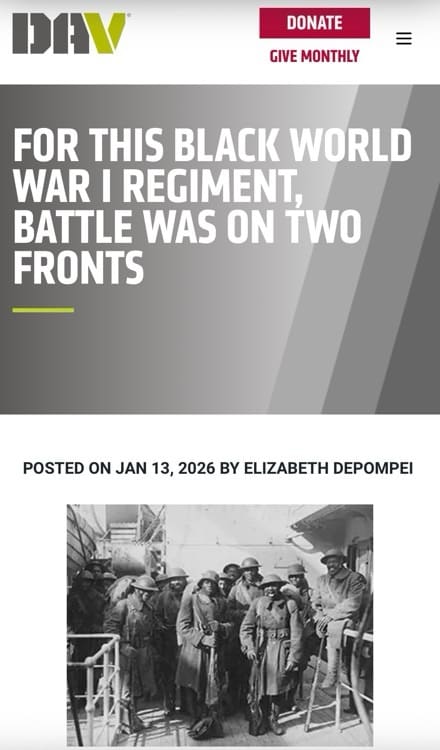
In the shadow of World War I’s trenches, where mud, gas, and machine guns defined heroism, Harlem’s 15th New York National Guard Regiment—better known as the 369th Infantry—fought not just the Kaiser’s army but a homefront enemy of bigotry and exclusion. These Black volunteers, many fresh from the streets of New York, shipped out with the American Expeditionary Force in 1917, only to face a double-barreled battle: proving their valor abroad while dodging Jim Crow’s crosshairs at home. Assigned to the French lines because white American units refused to fight alongside them, the Men of Bronze racked up unprecedented feats—over 170 days in combat without a single surrender, earning Croix de Guerre citations for every single soldier, and immortalizing legends like Henry Johnson, who single-handedly repelled a German raid with grenades, a rifle, and a bolo knife. DAV Magazine’s spotlight on their story isn’t just history; it’s a raw reminder of armed Black patriots who embodied the militia spirit long before it was mythologized.
Dig deeper, and the 2A implications hit like a Springfield ’03 bolt: these men weren’t issued weapons lightly. The 15th trained with surplus rifles amid New York’s restrictive carry laws and national hysteria over armed Negroes, echoing the very disarmament fears that birthed the Second Amendment as a bulwark against tyranny—federal or domestic. Their success abroad shamed segregationist policies, yet returning heroes faced lynch mobs and riots, like the 1919 Red Summer bloodbaths where disarmed Black communities were slaughtered. Fast-forward to today, and the 369th’s legacy screams relevance for the pro-2A community: in an era of assault weapon bans and race-baited gun control, their story underscores why the right to keep and bear arms isn’t a white privilege but a universal shield for minorities against state-sanctioned violence. They volunteered, armed up, and won—proving that a rifle in capable hands levels the battlefield, whether in France or the streets of 2024 America.
This isn’t dusty trivia; it’s a call to arms for 2A advocates. Curating tales like the 369th’s fortifies our cultural arsenal, countering narratives that paint gun rights as anything but life-affirming liberty. Share this, study it, and remember: the next time disarmament demagogues invoke public safety, invoke Harlem’s finest who knew better—battle was always on two fronts, and surrender was never an option.


