
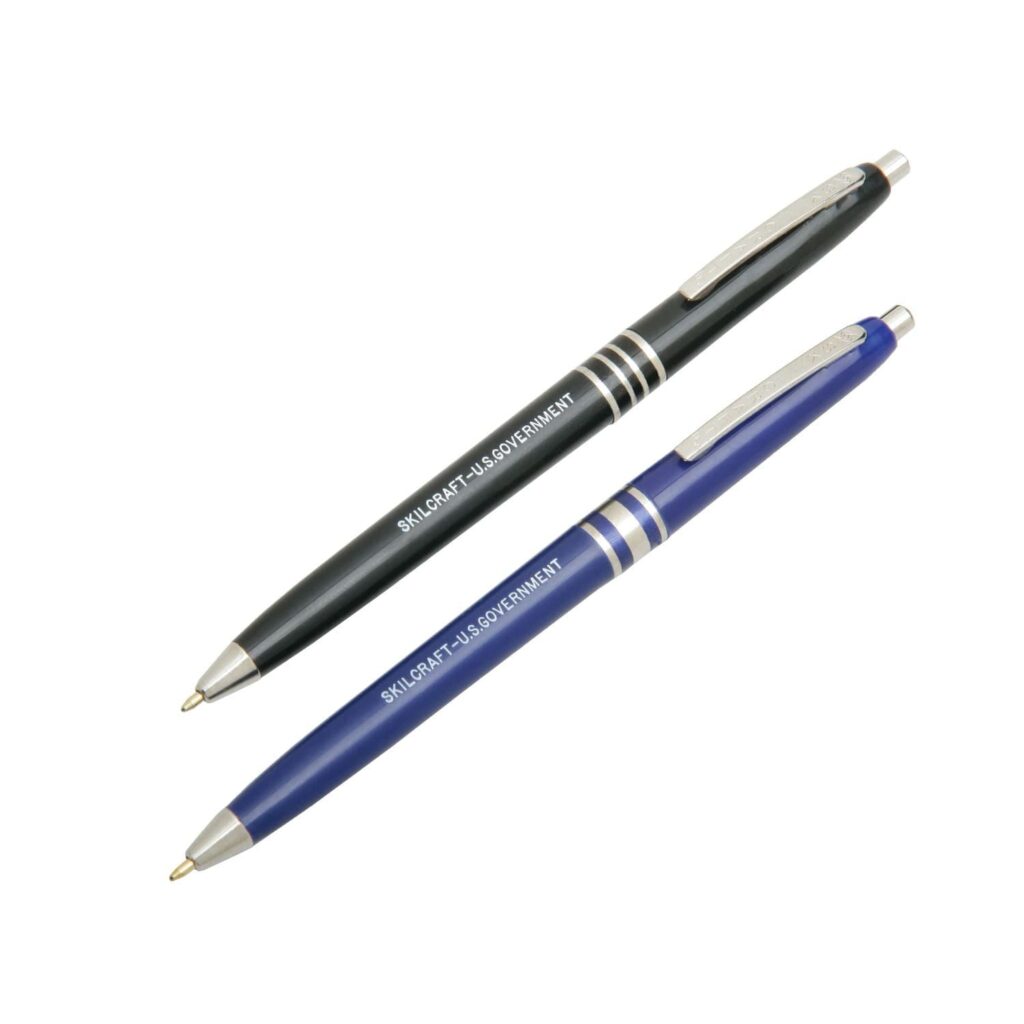
Ever since the National Industries for the Blind launched Skilcraft pens in 1968 under the AbilityOne program, they’ve been the unsung heroes of federal bureaucracy—those indestructible, grease-proof ballpoints that write upside down, underwater, and through apocalyptic paper jams. Government workers, from Pentagon clerks to Air Force pilots, swear by them, and even after leaving the service, one vet clings to the classic black ones. But plot twist: blue Skilcrafts exist too, lurking in the shadows of procurement catalogs like a covert op nobody talks about. This revelation isn’t just trivia; it’s a reminder that even in the monochrome world of mil-spec gear, variety sneaks in—much like how the 2A community uncovers forgotten calibers or suppressed variants that the ATF wishes stayed buried.
Dig deeper, and the Skilcraft saga mirrors the resilience of American manufacturing and set-aside programs that empower the disabled while churning out tools tougher than a Marine’s resolve. Black for the shadows, blue for… briefing rooms? The color choice sparks endless memes in vet circles, akin to debating 5.56 vs. .223—purists stick to black, but blue offers that subtle edge for marking up range targets or FFL logs without smudging. For the 2A crowd, it’s a microcosm of government overreach and innovation: these pens, born from Wagner-Peyser Act mandates, outlast commercial knockoffs, proving taxpayer dollars can fund quality when funneled right. Imagine if AR-15 parts kits got the same blind-made, battle-tested treatment—indestructible lowers that laugh at drop tests.
The implications? In a world where blue states push ink restrictions (metaphorically, for now), Skilcraft’s dual hues symbolize unyielding Second Amendment grit: adapt, endure, and always have a backup. Stock up on blue ones for your next NFA trust signing—they might just be the pen that survives the next bureaucratic apocalypse. Pro tip: pair with a Skilcraft notepad for the full gov-issue EDC, because freedom’s written in indelible ink.


