
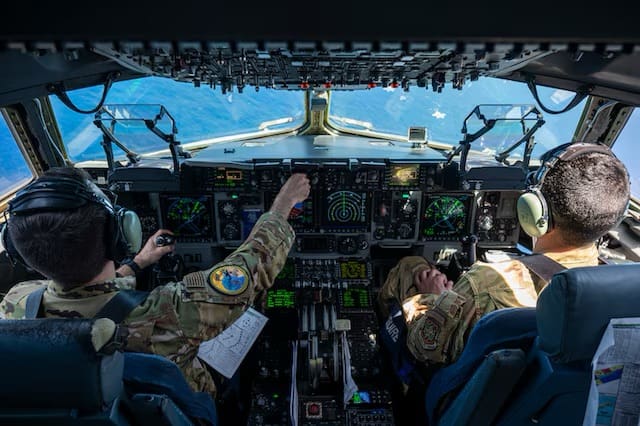
The U.S. Air Force just elevated its game in networked warfare by standing up an integrated program office under the Portfolio Acquisition Executive for Command, Control, Communications, and Battle Management to spearhead the Joint Fires Network (JFN). This isn’t some bureaucratic reshuffle—it’s a bold pivot to unify joint fires capabilities across services, fusing sensors, shooters, and decision-makers into a seamless kill web that promises to deliver precision strikes at machine speed. Think real-time data fusion from satellites, drones, and ground assets, all orchestrated to outpace adversaries like China or Russia in contested environments. The Air Force stepping up here signals a doctrinal shift: airpower isn’t just about owning the skies anymore; it’s about enabling the entire joint force to rain hellfire on high-value targets before the enemy even blinks.
For the 2A community, this development hits closer to home than you might think. The JFN’s emphasis on distributed, resilient networks mirrors the very ethos of decentralized firepower that armed citizens embody—redundancy, adaptability, and the ability to strike decisively without a single point of failure. While DoD pours billions into AI-driven targeting and hypersonic munitions integration, it’s a stark reminder of how elite militaries evolve to counter peer threats, often drawing inspiration from irregular warfare tactics that echo civilian self-defense principles. Pro-2A advocates should watch this closely: as JFN scales, it’ll normalize concepts like networked small arms (hello, future smart rifles with blue-force tracking) and man-portable fire control systems, blurring lines between military tech and what could trickle down to the civilian market via surplus or innovation spillovers. Uncle Sam is betting big on every sensor a shooter, which dovetails perfectly with the armed populace’s role as the ultimate strategic reserve—independent nodes in America’s unbreakable defense fabric.
The implications? Expect accelerated procurement cycles, with JFN potentially fast-tracking acquisitions like advanced datalinks and battle management software that could influence commercial optics, comms gear, and even AR-15 accessories down the line. This isn’t just Air Force business; it’s a blueprint for how America maintains overmatch, reinforcing why a robust Second Amendment ensures citizen-soldiers stay equipped to plug into that ecosystem if SHTF. Stay vigilant, train hard, and keep curating these dots—because when the joint force networks up, so should we.


