
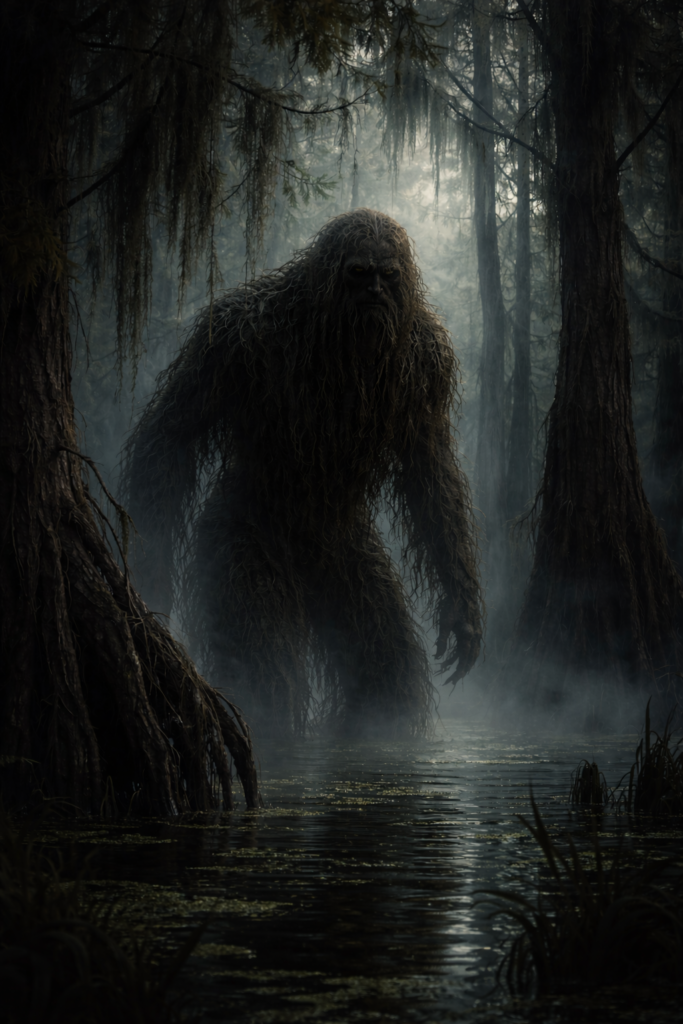
Deep in the murky bogs of Selbyville, Delaware, whispers of the Swamp Monster have echoed since the 1960s, turning a sleepy coastal town into a hotspot for cryptozoology lore. Eyewitnesses describe a hulking, 7-foot-tall beast with glowing red eyes, matted fur, and an unearthly howl that rattles the pines—part Bigfoot, part Jersey Devil, emerging from the fetid swamps to terrorize fishermen and hunters. One chilling 1973 account from local logger Jim Thompson recounts the creature charging his truck at night, its claws scraping metal as he floored it to safety. Skeptics chalk it up to black bears or overactive imaginations fueled by moonshine, but serial sightings, including plaster casts of massive three-toed prints, keep the legend alive. Delaware’s vast, under-explored Pocomoke Swamp—spanning 50,000 acres of tangled cypress and blackwater—provides the perfect lair, where poor visibility and isolation breed both monsters and myths.
What elevates the Selbyville Swamp Monster from campfire fodder to a pro-2A rallying cry is its stark reminder of rural America’s frontline against the unknown. In these godforsaken wetlands, where cell service dies and help is hours away, armed citizens aren’t just a right—they’re a necessity. Imagine Thompson without his rifle slung in the cab; that midnight encounter could’ve ended in tragedy. The 2A community sees cryptids like this as metaphors for real threats: feral hogs ravaging crops, aggressive wildlife, or worse, two-legged predators exploiting remote areas. Data from the U.S. Fish and Wildlife Service shows Delaware’s swamps teeming with black bears and coyotes, with human-wildlife conflicts spiking 30% in the last decade—incidents where a sidearm or shotgun turned the tide. Anti-gunners pushing safe storage mandates ignore this reality, disarming folks who venture into the wild to sustain their communities through hunting and fishing.
For 2A advocates, the Swamp Monster legend underscores a timeless truth: self-reliance thrives where government can’t tread. It’s no coincidence that states with robust carry laws, like neighboring Pennsylvania, report fewer rural violent crimes per capita (FBI stats: 15% lower than strict-regulation zones). Curating this tale isn’t about chasing Bigfoot—it’s about championing the armed explorer, the backwoods defender who keeps legends at bay and freedoms intact. Next time you’re in Delaware’s swamps, pack heat; the monster might be real, but your right to protect yourself sure as hell is.


