
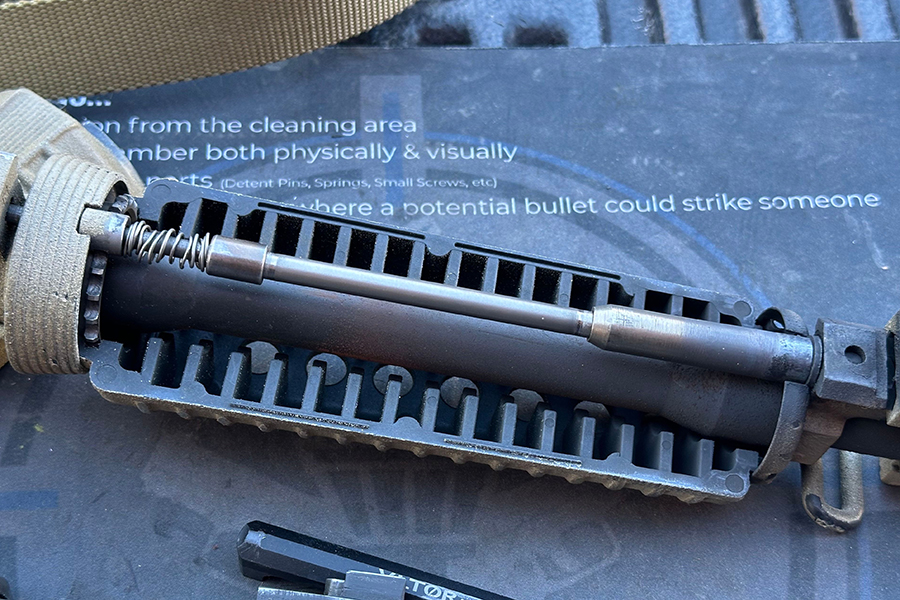
Back in the mid-2000s, the gun world lit up like a tracer round when word leaked that the U.S. Army was fielding the HK416—a short-stroke gas piston 5.56mm rifle—as part of its Special Operations Forces’ arsenal. Piston-driven systems, long a staple in battle rifles like the AK-47 and HK91, promised to fix the AR-15’s notorious direct impingement (DI) flaws: excessive carbon fouling in the bolt carrier group, heat buildup in tight spaces, and reliability dips in dirty conditions. The industry hailed it as the future; companies like PWS, LWRC, and Adams Arms rushed piston uppers and complete rifles to market, pitching them as the military-proven upgrade every AR owner needed. Enthusiasts swapped DI guns for pistons faster than you can say overgassed, convinced this was the evolution that would bury Eugene Stoner’s original design.
But here’s the clever twist few predicted: the piston hype train derailed not from any inherent flaw, but from the relentless march of DI refinement. While piston guns delivered on cleaner operation—keeping fouling forward in the gas block rather than cycling back into the action— they introduced trade-offs like added weight (that hefty piston and op-rod assembly), increased complexity (more parts to fail or break), and higher cost (premium materials and machining). Meanwhile, the AR platform’s DI ecosystem exploded with innovations: mid-length and rifle-length gas systems tamed overgassing, adjustable gas blocks fine-tuned reliability, and boutique barrels with better coatings slashed fouling. Troops in Afghanistan and Iraq reported piston guns like the MK17 SCAR-H were great for sustained fire, but for the lighter, handier 5.56 role, tuned DI M4s held their own—and weighed less. By 2010, the Army’s Next Generation Squad Weapon program sidelined full piston adoption, opting instead for hybrid 6.8mm designs, leaving civilian piston makers to pivot to niche markets like suppressed SBRs.
For the 2A community, this saga is a masterclass in market Darwinism and why modularity reigns supreme. Piston ARs aren’t dead—they thrive in home defense builds where cleanliness trumps ounces—but they’ve become a premium choice, not the default revolution. It underscores a pro-2A truth: government adoption doesn’t dictate civilian innovation. We’re free to experiment, from budget DI clones to $3,000 piston exotics, proving the AR’s genius lies in its adaptability. If you’re eyeing a piston swap, ask yourself: do you need the reliability edge for dirty apocalypse runs, or is a well-tuned DI with a suppressor-ready gas block enough? The future isn’t one system—it’s your system, customized without apology.


