
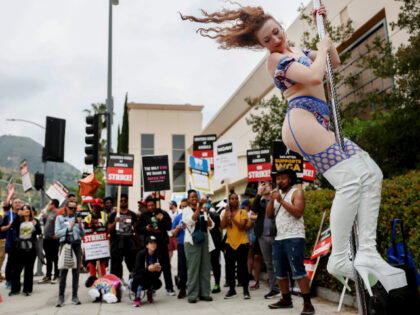
Imagine a scene straight out of a dystopian script: union workers picketing their own union’s leadership, right in front of another union’s HQ. That’s exactly what went down on Monday when the Writers Guild Staff Union (WGSU)—the behind-the-scenes employees who keep the Writers Guild of America (WGA) humming—marched to SAG-AFTRA headquarters in Hollywood. Armed with signs and chants, they accused WGA bosses of bargaining in bad faith over wages, job protections, and basic working conditions. It’s peak irony: the very people scripting America’s labor dramas are now extras in their own strike subplot, protesting the union that protests studios. This isn’t just tabloid fodder; it’s a masterclass in institutional hypocrisy, where the left’s favorite power structures devour their own.
Dig deeper, and this mess exposes the rot in Hollywood’s self-righteous ecosystem, a place that preaches solidarity while practicing cutthroat elitism. WGSU members, often low-paid admins and organizers toiling for the WGA’s high-profile scribes, claim leadership has stonewalled negotiations for months—echoing the same gripes the WGA lobbed at studios during last year’s strikes. But here’s the clever twist: SAG-AFTRA, fresh off its own contentious contract wins, becomes the neutral ground for this infighting, highlighting how even progressive unions fracture under pressure. The implications ripple far beyond Tinseltown, underscoring why centralized power—be it in guilds or government—breeds betrayal. When the little guy inside the machine gets screwed, it validates every skeptic’s view that these orgs prioritize insiders over ideals.
For the 2A community, this is a neon sign flashing watch your flanks. Hollywood’s union warriors, who routinely demonize gun owners as villains in their propaganda flicks, can’t even govern their own ranks without imploding. It mirrors the anti-2A crowd’s playbook: demand control, then wield it selectively against their own. If these folks can’t protect their staffers’ rights, why trust them with yours? This fracture weakens their cultural megaphone, creating openings for pro-2A voices to counter-narrate with stories of real self-reliance. Keep an eye on this—when the writers’ writers strike back, it might just rewrite the script on who holds the real power in La La Land.


