
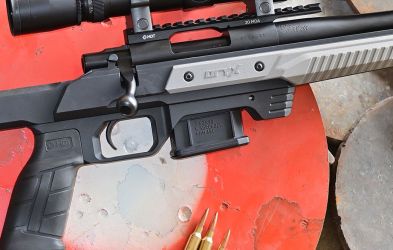
There’s no doubt that most factory rifles are shipped to consumers equipped with single-stage triggers. It’s the default choice for manufacturers like Ruger, Remington, and Savage—reliable, affordable, and straightforward, with a consistent pull from take-up to break. But as any serious shooter knows, this one-and-done design prioritizes mass production over precision, often delivering a gritty 5-7 pound trigger pull that’s forgiving for plinkers and hunters but a liability for competitive marksmen or defensive scenarios where split-second accuracy matters. Single-stage triggers shine in their simplicity: no learning curve, no accidental stage-skipping under stress, making them ideal for beginners or budget builds where you’re not dropping $300 on a Geissele drop-in.
Enter the two-stage trigger, the precision engineer’s retort to factory mediocrity, splitting the pull into a light first stage (typically 1.5-3 pounds of take-up) followed by a crisp, short second stage break (another 1-2 pounds). Think military M4s or high-end ARs from Daniel Defense—they’re engineered for that deliberate wall before the shot, reducing unintended discharges while enabling sub-MOA groups at 500 yards. The 2A community loves them for good reason: in a post-ATF brace rule world, upgrading to a two-stage like the Timney or TriggerTech isn’t just about tightening groups; it’s about empowering responsible owners with tools that match their skill level, sidestepping the nanny-state narrative that scary triggers need regulating. Data from precision rifle matches backs this—shooters with two-stage setups consistently outpace single-stage peers by 20-30% in speed and accuracy under time pressure.
For the everyday defender or range warrior, the implication is clear: don’t settle for factory slop. A $150 two-stage swap transforms your mil-spec rifle into a tack-driver, bridging the gap between consumer-grade and custom without breaking the bank or inviting legal headaches. It’s a subtle flex against anti-gun hysteria—proving that innovation, not restriction, enhances safety and capability. If you’re still rocking that mushy single-stage, it’s time to stage up; your groups (and Second Amendment pride) will thank you.


