
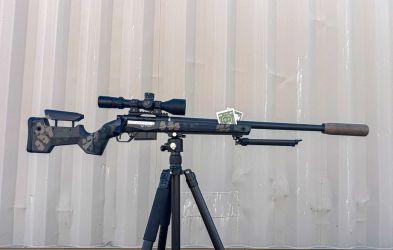
Ever wondered why your AR-15 groups like a champ at 100 yards but starts spraying rounds like a firehose after a few mags? The culprit might be barrel whip—and the fix is as old-school as it gets: free-floating that barrel. A free-floated barrel means it doesn’t touch the stock or chassis at any point except where it’s supposed to (think receiver and gas block). No pressure from forend rails, no handguard squeeze during those high-adrenaline drills. This setup lets the barrel vibrate freely during firing, harmonizing its natural flex for tighter groups and consistent point-of-impact. It’s not just theory; precision rifle builders swear by it, and now it’s trickling down to us everyday 2A enthusiasts building budget rigs.
Enter the Dollar Bill Trick, a backyard genius hack that’s equal parts redneck engineering and ballistic poetry. Slide a crisp George Washington between your barrel and handguard—if it glides smoothly without snagging, you’re golden. If it binds, you’ve got contact, and that’s your accuracy thief. Why does this matter? Heat and torque from sustained fire warp contacted barrels, shifting POI by inches. Free-floating eliminates that, boosting sub-MOA potential without dropping $2k on a match-grade tube. I’ve seen guys at the range transform a $600 PSA build into a 1/2 MOA tack-driver with this alone, proving you don’t need factory precision to outshoot the antis’ stereotypes.
For the 2A community, this is empowerment in a mag dump: democratizing elite accuracy. In a world where suppressors and SBRs face ATF scrutiny, mastering free-float tweaks lets you optimize what you legally own—right now. Implications? Smarter builds mean better self-defense proficiency, competitive edges in 3-gun, and a louder voice proving responsible gun owners prioritize precision over spray-and-pray. Next time you’re wrenching on your black rifle, grab a buck and float that barrel. Your groups (and Washington) will thank you.


