

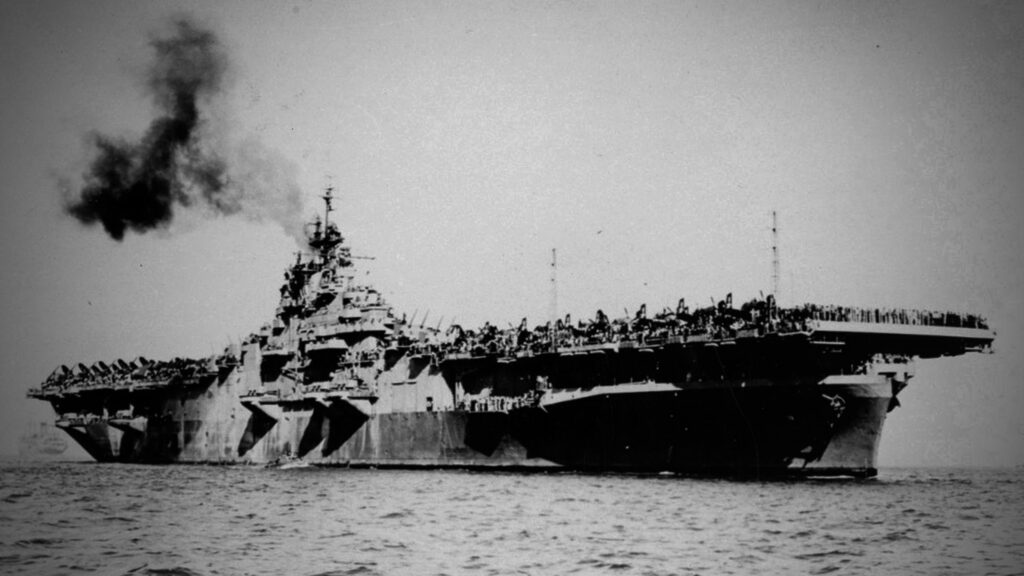
The USS Hornet (CV-12), the Essex-class aircraft carrier that rose from the ashes of its predecessor sunk at the Battle of Santa Cruz in 1942, delivered a stinging rebuke to Imperial Japan during World War II. Commissioned in late 1943, this Gray Ghost successor—named to honor the original Hornet (CV-8) that launched Doolittle’s audacious raid on Tokyo—racked up an impressive combat ledger. From strikes on Truk and the Marianas to supporting the invasions of Iwo Jima and Okinawa, Hornet’s air wings launched thousands of sorties, sinking enemy shipping and crippling airfields. Peter Suciu’s piece in #History vividly captures her role in the Pacific Stinger narrative, highlighting how she survived kamikaze hits, typhoons, and relentless combat to emerge as a symbol of American industrial might and resilience, ultimately contributing to Japan’s surrender in 1945. Now a museum ship in Alameda, California, she stands as a floating testament to the Greatest Generation’s grit.
What elevates Hornet’s story beyond naval trivia is its embodiment of the unyielding American spirit that parallels the ethos of the Second Amendment. Just as the carrier’s rapid construction—launched in just 150 days amid wartime urgency—showcased the power of a mobilized, armed populace ready to defend freedom, so too does 2A empower ordinary citizens to safeguard liberty without relying on distant government fleets. Hornet wasn’t built by elites in ivory towers but by shipyard workers wielding tools of production, much like how armed Americans form the ultimate militia against tyranny. In an era of eroding self-reliance, her legacy reminds us that true security stems from individual readiness, not bureaucratic promises—echoing the Founders’ vision of a well-regulated militia drawn from the people themselves.
For the 2A community, Hornet’s tale carries a pointed implication: complacency invites defeat, just as it nearly did for the Allies before industrial mobilization turned the tide. Today, as global threats loom and domestic overreach grows, maintaining personal armaments and marksmanship skills is our modern equivalent of launching Hellcats from a pitching deck. Visit the Hornet if you can—stand on her hangar deck, feel the echo of history, and recommit to the right that ensures we’ll always have the means to sting any aggressor. Suciu’s article is a must-read spark for that fire.


