
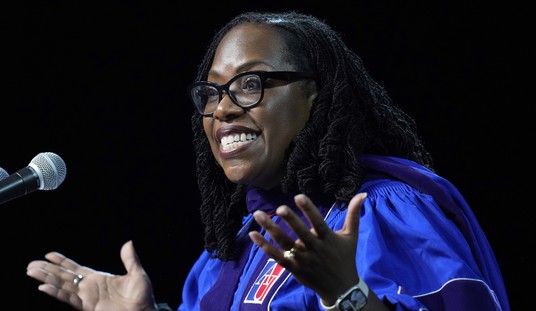
In a move that’s got the Second Amendment community buzzing (and not in a good way), Yale Law School’s Akhil Reed Amar has leaped to the defense of Justice Ketanji Brown Jackson’s eyebrow-raising dissent in the Supreme Court’s recent concealed carry case involving Hawaii’s so-called vampire rule. For those late to the party, this draconian Hawaii statute demands that concealed carry applicants prove a special need for self-defense beyond the mere specter of general crime—essentially treating the right to bear arms like a gothic invitation-only affair where only the unusually threatened get in. Jackson, in her solo dissent to the 9-0 smackdown of the rule, lamented that striking it down might unleash violence by expanding carry rights, prompting Amar’s op-ed salvo in which he argues her position isn’t absurd but a nuanced nod to Hawaii’s unique island geography and crime patterns. Clever pivot, Professor—turning a constitutional facepalm into a geography lesson.
But let’s dissect this with the precision of a gunsmith tuning a trigger: Amar’s defense reeks of the post-Bruen scramble by gun-control academics to salvage sensitive places and shall-issue-plus regimes from the ashes of discretionary may-issue permitting. Bruen’s 2022 landmark demanded that carry restrictions align with historical traditions, and Hawaii’s vampire rule—requiring applicants to show they’re more vampire bait than the average Joe—flunked that test spectacularly. Jackson’s fear-mongering about violence ignores mountains of data from shall-issue states like Florida and Texas, where concealed carry expansions correlated with stable or declining crime rates (e.g., FBI UCR stats showing violent crime drops post-reform). Amar’s Hawaii exceptionalism? It’s a slippery slope dressed as island logic; if geography justifies gutting 2A, what’s stopping California from citing earthquakes or New York from blaming subways? This isn’t scholarship—it’s a rear-guard action to keep red-flag permitting alive.
For the 2A faithful, the implications are crystal: victories like this Hawaii rout affirm Bruen’s teeth, but intellectual heavyweights like Amar signal the left’s pivot to contextual erosion—endless litigation over special needs in blue strongholds. Gun owners should celebrate the win, but double-down on state-level preemption laws and amicus briefs packed with real-world carry data. Jackson’s dissent may be absurd on its face, but Amar’s polish makes it dangerous; time to load up on facts, not folklore, and keep the pressure on. The right to carry isn’t a special dispensation—it’s a birthright, vampire rules be damned.


