

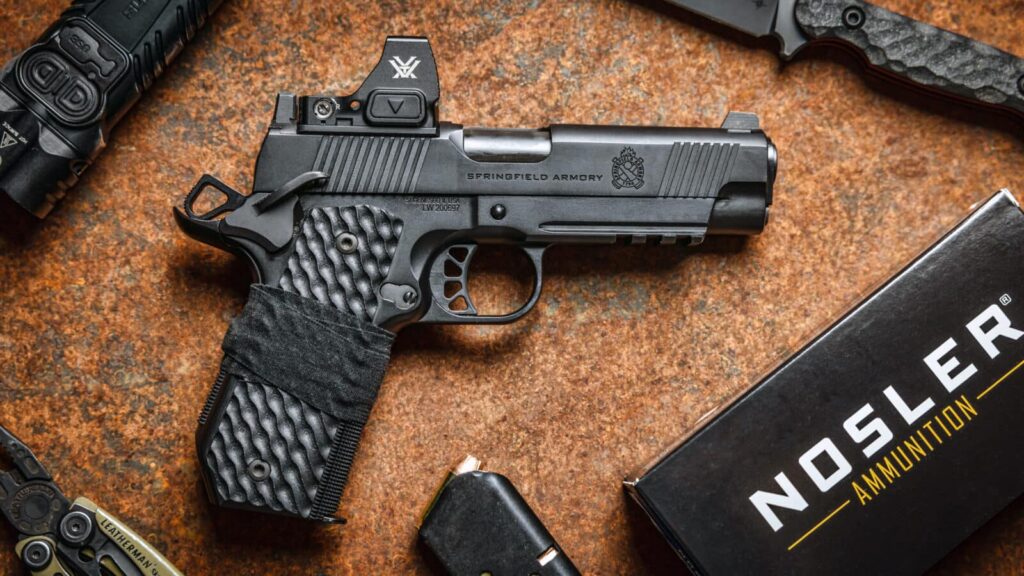
Clayton Walker’s latest dive into #Guns lore throws a Molotov cocktail at one of John Browning’s most iconic design choices, and it’s sparking the kind of debate that keeps 2A enthusiasts up at night. For the uninitiated, the 1911’s grip safety— that little beaver tail that blocks the trigger unless you palm the gun properly—was meant to prevent accidental discharges if the pistol got jostled in a holster or dropped. Browning engineered it as a New Army safeguard after the thumb safety, responding to military brass demanding extra layers against negligent triggers in the trenches of World War I. Walker’s take? It’s an overengineered nuisance that trains bad habits, complicates draw strokes under stress, and arguably contributes more to fumbles than it prevents in real-world self-defense scenarios.
Diving deeper, Walker’s analysis isn’t just contrarian clickbait; it’s backed by biomechanics and history. Data from modern training metrics shows grip safeties can snag during one-handed draws—a nightmare in a home invasion where your support arm’s pinned. Compare it to striker-fired wonders like the Glock, which thrive on simplicity with no such frippery, boasting lower ND rates in LE stats (per FBI reports averaging under 1% with proper training). Yet the 1911’s safety cocktail made it the gold standard for 70+ years, arming GIs through two world wars and influencing everything from 2011s to race guns. Walker’s point lands hard: in an era of appendix carry and minimalist CCW, does this passive block foster complacency, lulling shooters into skipping active trigger discipline? For 2A diehards, it’s a reminder that safety features often prioritize bureaucrats over operators—echoing today’s forced smart-gun pushes that could neuter our rights.
The implications for the community? This isn’t academic; it’s a blueprint for evolution. As we fight mag bans and red-flag laws, Walker’s critique arms us with ammo against anti-gunners who fetishize safety to justify disarming us. Ditch the grip safety in your next build? Modern 1911 clones like the Staccato or Atlas Gunworks already do, proving Browning’s masterpiece endures precisely because it’s endlessly modifiable. Grab Walker’s full thread, hit the range, and ask yourself: in a fight, do you want passive steel or pure instinct? The 2A ethos says bet on the shooter, every time.


