

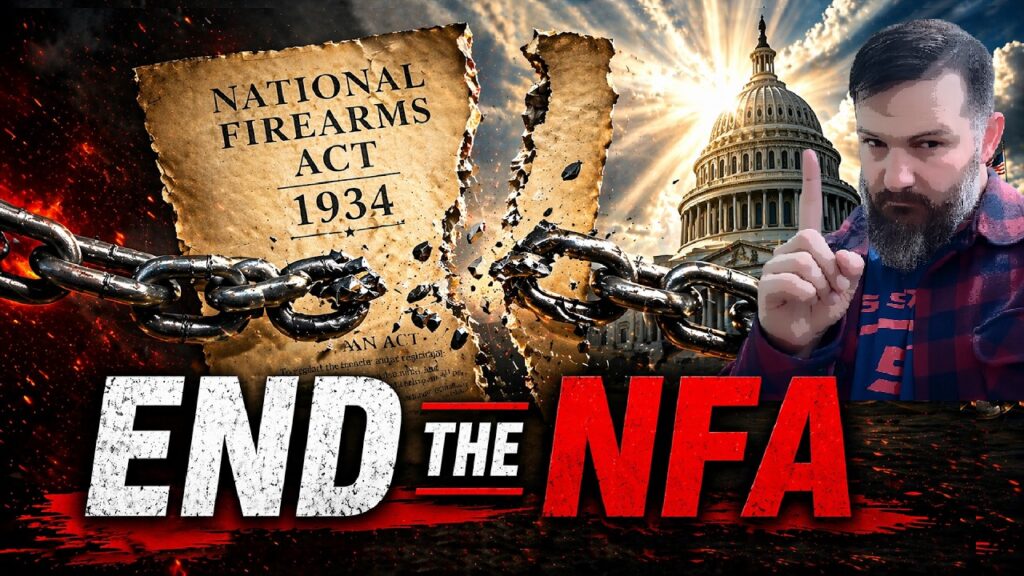
Strategy to End NFA via Flooded Registry
In a recent video on the VSO Gun Channel, host Kurt Hollstrom argues that the recent ATF rule dropping the tax stamp to $0 for short-barreled rifles (SBRs), short-barreled shotguns (SBSs), Any Other Weapons (AOWs), and suppressors is a deliberate tactic to overwhelm the National Firearms Act (NFA) registry. Citing updated ATF figures through March 2026 showing 810,000 NFA forms submitted in the first three months alone, Hollstrom highlights an unprecedented surge. Suppressors, for example, have jumped from 3.5 million total (1934-2023) to nearly 6 million by early 2026, projecting that 2026 alone could match 90 years of prior registrations.
Legal Pillars and Pros of Participation
Hollstrom builds his case on key Supreme Court precedents: the 1939 Miller decision (NFA items must be both ‘dangerous and unusual’), 2008 Heller (protects arms in ‘common use’ for lawful purposes), the Caetano case (pegging ‘common use’ at around 200,000 units), and 2022 Bruen. With the tax eliminated, he claims the registry loses its constitutional taxing power basis, amplified by the 2024 Chevron overturn curbing administrative overreach. Pros include normalizing NFA items for self-defense—’short-barreled rifles, short-barreled shotguns… are demonstrably excellent for home defense’—and building ‘common use’ numbers to challenge regulations.
- Pros: Accelerates ‘common use’ threshold; exposes chilling effect of prior $200 tax; positions for court wins on Second Amendment grounds.
- Cons (Addressed by Host): Critics fear ‘going on a list’ or normalizing registration—Hollstrom retorts, ‘Well, no [__] Sherlock. That’s not how this works’; non-participants may just fear the unfamiliar, not true principle.
- Specs: 2.5M new suppressors in ~2 years; 810K forms Q1 2026; ‘Tasers… 200,000-ish’ as common-use benchmark.
“I am on record saying that it’s not about the tax, it’s about the registration. However, when you put a tax on something, there is a chilling effect on its use.” Hollstrom urges viewers to participate, framing it as a ‘historic movement’ to end the NFA.


