

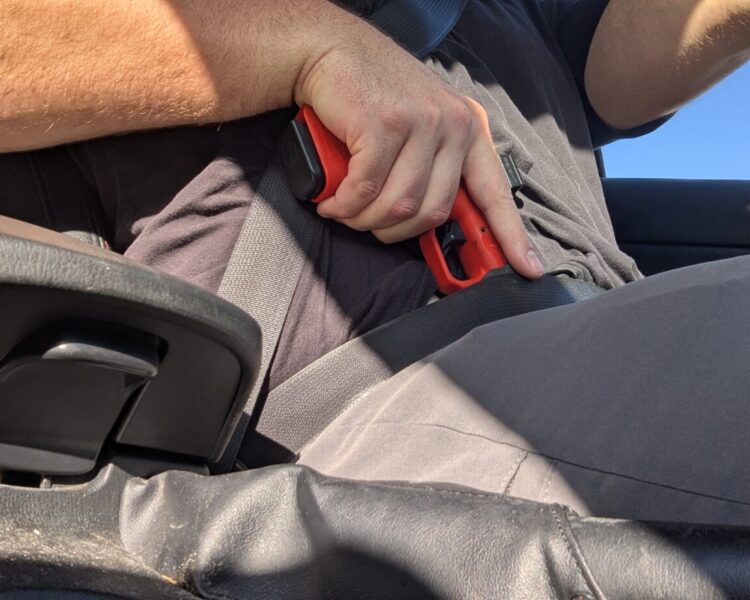
Is your vehicle a cover or a coffin? It depends on if you know how to know how to use it. We spend a lot of time in vehicles, and that should be a part of our defensive training. This blunt headline cuts right to the chase, and it’s a wake-up call for every concealed carrier who treats their car like an afterthought in their self-defense regimen. In a world where carjackings, road rage ambushes, and opportunistic smash-and-grabs are daily headlines—from the FBI’s stats showing over 30,000 carjackings annually in the U.S. to viral videos of drivers caught flat-footed—ignoring vehicle tactics is like leaving your front door unlocked. The 2A community gets this: your holster draw is gold, but fumbling for your sidearm while buckled in, surrounded by glass and steel, turns that advantage into a liability. Smart training flips the script, teaching you to use the vehicle’s doors, pillars, and even the engine block as ballistic shields, turning a potential deathtrap into a fighting position.
No magic here—just deliberate, repeatable practice that bridges the gap between range time and real-world chaos. Picture this: you’re idling at a light when two thugs yank your door; without vehicle-specific drills, your draw stalls on the seatbelt, buying them seconds to disarm you. But with training—like strong-side draws from the low ready, using the A-pillar for cover, or clearing angles through the B-pillar—you dictate the fight. Pros like Massad Ayoob have long preached this in works like *Deadly Force*, emphasizing how vehicles amplify both vulnerability (limited mobility) and capability (ramming as a last resort). For the 2A crowd, this isn’t optional; it’s an extension of constitutional carry rights into the mobile battlespace we inhabit 90 minutes a day on average, per DOT data. Skip it, and you’re betting on luck; master it, and your car’s your ally.
The implications? Integrate vehicle draws into every dry-fire session and local IDPA match—grab a buddy for realistic scenarios, film it, iterate. States like Florida and Texas, with strong stand-your-ground laws, make this training a force multiplier, legally affirming your right to defend from the driver’s seat. Forward-thinkers in the community are already pushing this: look at ShivWorks’ vehicle modules or Craig Douglas’ ECQC courses, where vehicle as coffin becomes vehicle as command post. Bottom line: 2A isn’t just about the gun; it’s about wielding your entire environment. Train accordingly, stay vigilant, and keep the coffin for the bad guys.


