

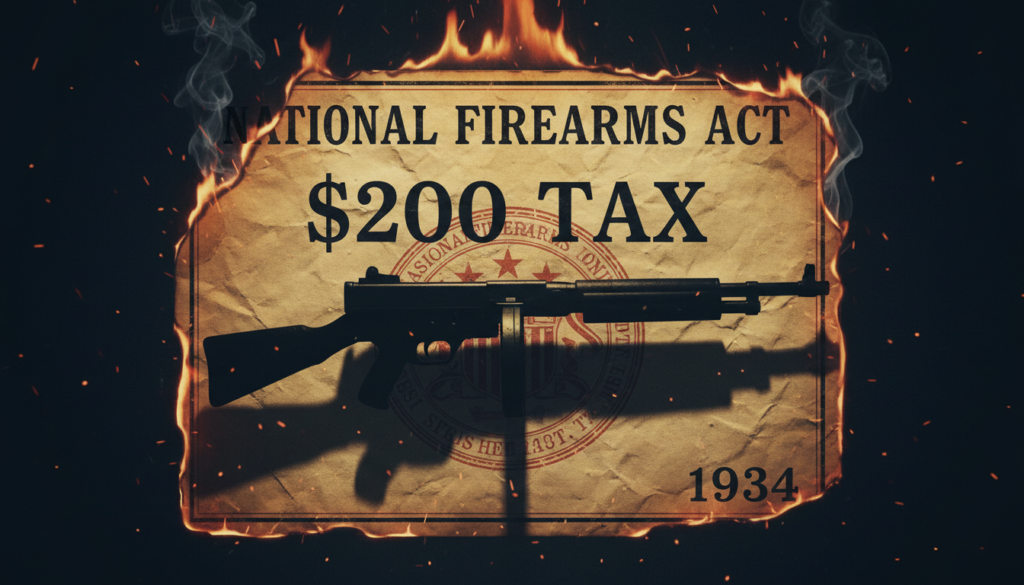
Imagine the scene: It’s 1934, and Congress is rushing through the National Firearms Act (NFA), a sweeping law that slaps a $200 tax stamp on everything from machine guns to short-barreled shotguns and suppressors—prices that, adjusted for inflation, equate to over $4,500 today. The official narrative? A desperate response to the roaring gangland violence of the Prohibition era, with Bonnie and Clyde’s bloody escapades painted as the final straw. But dig into the real history, and the timeline crumbles like a house of cards. The crime wave peaked in 1933—homicides dropped 15% that year alone, per FBI data—and by the time the NFA hit the floor, the St. Valentine’s Day Massacre was five years old. Congress didn’t even bother with a recorded vote; it passed by voice vote in the dead of night, dodging scrutiny. This wasn’t crisis legislation; it was opportunistic overreach, timed when the panic had already ebbed.
The constitutional sleight-of-hand is even more damning. Direct gun bans were off the table after decades of Supreme Court precedents affirming the Second Amendment as an individual right (think United States v. Miller’s own tangled roots). So, they dressed it up as a tax measure under the Commerce Clause, a workaround Attorney General Cummings himself admitted under oath was a pretext to sidestep the Constitution. Cummings testified before the House Ways and Means Committee that the tax wasn’t about revenue—it was about registration and control, with the Treasury Department weaponized to deny stamps and prosecute owners. Fast-forward to today: We’ve seen this playbook repeated in every registration scheme from the ’68 Gun Control Act to modern ATF rule-making on braces and ghosts. The NFA didn’t stop crime (homicide rates kept fluctuating unrelated to the law), but it created a federal registry-by-another-name, chilling ownership of Title II items to near zero.
For the 2A community, this isn’t ancient history—it’s a blueprint for resistance. The NFA’s survival hinged on that flimsy tax facade, upheld narrowly in cases like Haynes v. United States (1968), which exposed its self-incrimination flaws before Congress fixed it. Implications? Every push for assault weapon registries or universal background checks echoes this era: fearmongering post-crime-spike, voice-vote sneakiness, and admitted constitutional gymnastics. Arm yourself with these facts—challenge the myths, demand recorded votes, and remember: the real crime wave was the one against our rights, and it’s still lapping at our shores. Semper Fi, Second Amendment style.


