
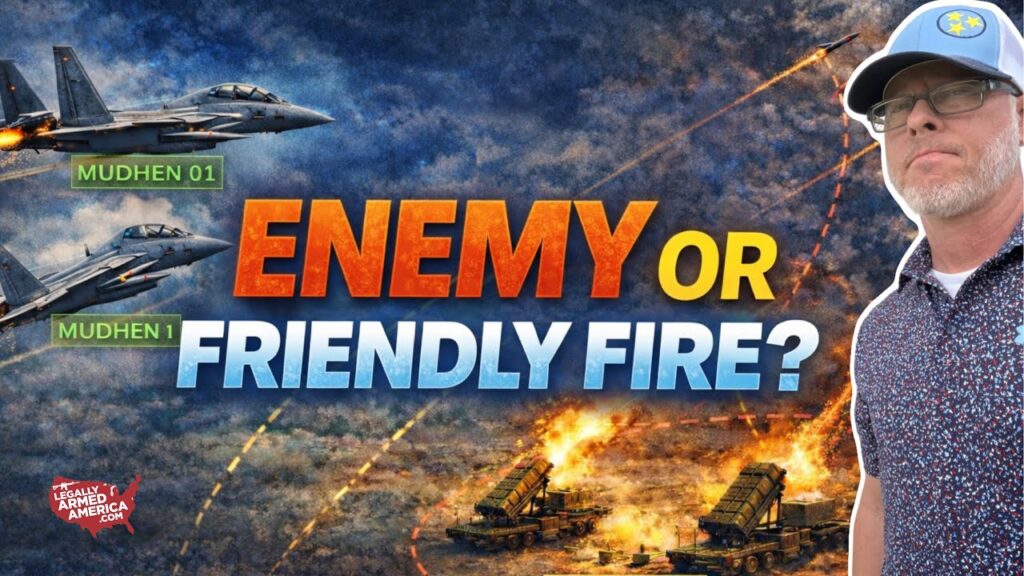
Imagine the chaos: Iranian missiles and drones screaming toward Kuwaiti skies, Patriot batteries roaring to life, and in the frenzy, three friendly jets get vaporized by the very shields meant to save them. This isn’t some Hollywood script—it’s a real-world software meltdown in a live battlespace, dissected in a gripping video breakdown that peels back the layers of radar confusion, IFF glitches, and automation gone haywire. Fast jets mimicking ballistic trajectories on stressed radars, operators succumbing to automation bias by rubber-stamping machine kills too quickly, and overlapping defenses turning the sky into a deadly pinata. Even the world’s elite Patriot crews—American-trained pros—couldn’t outrun the collision of bleeding-edge tech and human limits in a hypersonic blender.
Dig deeper, and this Kuwait fiasco screams lessons from the edge of modern warfare. Patriot’s target ID hinges on algorithms that prioritize speed and trajectory over nuance; when F-15s or whatever allies were zipping through at Mach speeds, they lit up like Scuds. IFF transponders? Great in theory, but electronic warfare, clutter, or a single firmware hiccup can blind them. We’ve seen echoes in past blue-on-blue tragedies, like the 2003 Patriot downing of a British Tornado or the USS Vincennes Airbus horror—reminders that no system is infallible when missiles fly at 3km/s. The real kicker: dense air defense nets amplify errors exponentially, forcing split-second calls where hesitation kills you and over-trust does the same to your wingmen.
For the 2A community, this is a stark parallel to why we clutch our AR-15s and Glocks like lifelines. Governments pour billions into smart systems that promise precision protection, yet they glitch, fail, and slaughter friendlies when the chips are down—relying on distant coders, fallible operators, and fragile supply chains. You? Your rifle doesn’t crash from a software update or get jammed by ECM; it’s reliable, personal, and idiot-proof in trained hands. In a world where state-of-the-art Patriots can’t distinguish friend from foe amid chaos, the ultimate defense is the one you control—no middleman, no algorithm, just you and your God-given right to stand your ground. This incident isn’t just a tech fail; it’s a rallying cry for decentralized, individual firepower over centralized illusions of safety.


