
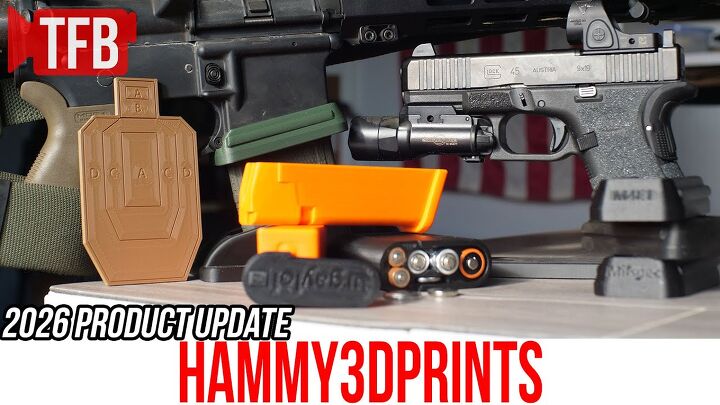
Picture this: you’re wandering the neon-lit chaos of SHOT Show 2026, the epicenter of all things firepower, when suddenly a grinning provocateur named Hammy3DPrints rolls up with a stash of what he cheekily dubs plastic crack. Not the illicit kind, mind you, but the revolutionary, homebrewed 3D-printed gun parts and accessories that have the 2A world buzzing. In a sit-down captured by BallisticAviation, Hammy lays out his latest creations—think precision-engineered lowers, custom grips, and modular attachments that push the boundaries of polymer perfection. It’s not just show-and-tell; it’s a bold middle finger to the naysayers who claim additive manufacturing can’t hang with CNC-machined steel. Hammy’s gear isn’t fragile filament fantasies; these are battle-tested prototypes optimized for reliability, with reinforced infill patterns and material blends that rival factory specs.
But let’s peel back the hype: this plastic crack moment at SHOT isn’t mere spectacle—it’s a seismic shift for the 2A community. We’ve seen 3D printing evolve from Ghost Gunner garage hacks to SHOT-floor showdowns, democratizing firearm customization in ways regulators never anticipated. Hammy’s pitch underscores a critical truth: when ATF crackdowns tighten on commercial frames and receivers, innovators like him flood the market with open-source alternatives. His accessories—ergonomic upgrades for ARs, suppressors mocks, even optic mounts—aren’t just cheaper (we’re talking pennies on the dollar versus OEM); they’re infinitely tweakable, fostering a maker ethos that empowers everyday defenders. Implications? Wider access means faster iteration on designs, sidestepping supply chain chokepoints, and a cultural win for self-reliance. Critics cry untraceable menace, but proponents see liberation—plastic crack as the ultimate equalizer against overreach.
The real genius here is Hammy’s timing. SHOT 2026 arrives amid escalating legal battles over printable files and frame kits, making his booth a de facto protest. For 2A enthusiasts, it’s a call to arms: download, print, prove. BallisticAviation’s interview doesn’t just showcase the tech; it spotlights the thoughtfulness—Hammy discusses tolerances, heat resistance, and legal navigability, turning potential pitfalls into pro tips. If you’re not already firing up your Ender 3, this is your wake-up call. The future of firearms isn’t forged in factories; it’s extruded one layer at a time, and Hammy3DPrints just handed us the blueprint. Grab your filament and join the revolution—before the feds figure out how to ban .gcode.


