
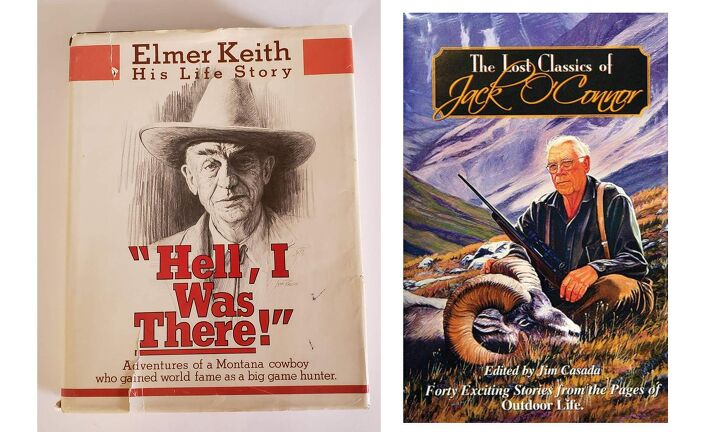
These days, the gun world pulses with tactical gear, red dots, and self-defense drills, but rewind to the post-WWII era, and magazines like American Rifleman were all about the Fudd life—hunting camps, upland birds, and big-game pursuits under wide-open skies. Enter the titans: Jack O’Connor, the eloquent outdoor scribe and rifleman extraordinaire, versus Elmer Keith, the grizzled Idaho cowboy and sixgun savant. Their clash, dubbed the Great Killing Power Controversy, wasn’t just a spat over ballistics; it was a philosophical showdown that shaped how we think about stopping power, from elk slopes to courtroom defenses today. O’Connor championed the .270 Winchester—a flat-shooting, moderate-recoil cartridge perfect for precise heart-lung shots on deer or sheep—arguing that surgical accuracy trumped raw thump. Keith, ever the empiricist with his sawn-off .44 Specials and .357 Magnums, fired back that big, heavy bullets at moderate velocities delivered killing power through massive tissue destruction, dismissing O’Connor’s precision fetish as fancy talk for the weak-wristed.
The debate raged in print for decades, with Keith’s bear-mauling tales and handloading wizardry clashing against O’Connor’s Alaskan hunts and velocity charts, dividing the Fudd flock like Moses parted the Red Sea. Keith ultimately prevailed in the tactical sense—his heavy-hitter gospel birthed the .44 Magnum and fueled the magnum mania that dominates modern self-defense dogma, where bigger is better echoes in hollow-point debates and 10mm vs. 9mm forum wars. Yet O’Connor’s legacy whispers a pro-2A truth: versatility and skill beat brute force every time. In today’s regulatory crosshairs, where anti-gunners demonize assault weapons and high-capacity mags as overkill, this old feud reminds us that the Second Amendment protects the sportsman’s .270 plinker as fiercely as the defender’s Keith-inspired hand cannon. It’s a unifying thread—hunting roots nurture the self-defense tree—proving Fudds aren’t the enemy; they’re the foundation keeping our rights from eroding under tactical bro-culture excess.
For the 2A community, the implications cut deep: Keith’s victory normalized power creep, arming us against real threats but inviting scrutiny from those who equate magnum energy with military-grade menace. O’Connor’s precision ethos, meanwhile, bolsters the cultural case for firearms as tools of heritage, not just tools of war—vital when SCOTUS nods to tradition in Bruen. Dive into their writings (Keith’s Hell, I Was There vs. O’Connor’s The Art of Hunting Big Game), load up some .270s and .44s at the range, and you’ll feel the controversy alive. It’s not ancient history; it’s the blueprint for defending every caliber in our arsenal.


