
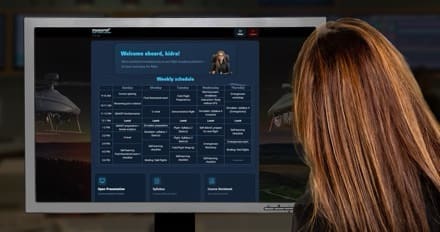
Steadicopter, the Israeli powerhouse behind some of the world’s most agile rotary unmanned aerial systems (UAS), just dropped a game-changer: the Steadicopter UAS Academy. This isn’t your average online tutorial—it’s a full-throttle training hub tailored for global operators and technicians, diving deep into mission planning, maintenance, and tactical deployment of their Black Robin and Swift UAVs. Picture elite squads mastering autonomous swarms for ISR (intelligence, surveillance, reconnaissance) in denied environments, all while Steadicopter ensures customers squeeze every ounce of performance from these quadrotor beasts that can loiter for hours, evade threats, and deliver precision payloads. With conflicts from Ukraine to the Middle East showcasing rotary UAVs as force multipliers, this academy signals Steadicopter’s bet on empowering end-users to outpace adversaries in the drone arms race.
For the 2A community, this move hits like a high-capacity mag drop—pure empowerment through knowledge. Just as responsible gun owners demand hands-on training to wield AR-15s or precision rifles effectively, Steadicopter’s academy democratizes advanced tech that civilians, hunters, and private security pros can legally deploy under FAA Part 107 or beyond-visual-line-of-sight waivers. Imagine ranchers in Texas using Black Robins for real-time border surveillance, or competitive shooters integrating UAV spotters for long-range sessions—bridging the gap between consumer drones and mil-spec gear. It’s a subtle nod to self-reliance: in an era where Big Tech gatekeeps airspace, Steadicopter arms the little guy with pro-level skills, echoing the 2A ethos that proficiency trumps prohibition.
The implications? A ripple effect for decentralized defense. As rotary UAS proliferate (global market projected to hit $50B by 2030), academies like this erode the monopoly of state actors, letting 2A patriots build homestead sentinels or community watch networks. Critics might cry militarization, but that’s code for fearing an informed populace—much like how training academies turned skeptical novices into confident carriers. Steadicopter isn’t just selling drones; they’re forging a new frontier of tactical literacy, where the right to defend starts with the right to train. Gear up, operators—this is the sky’s second amendment moment.


