
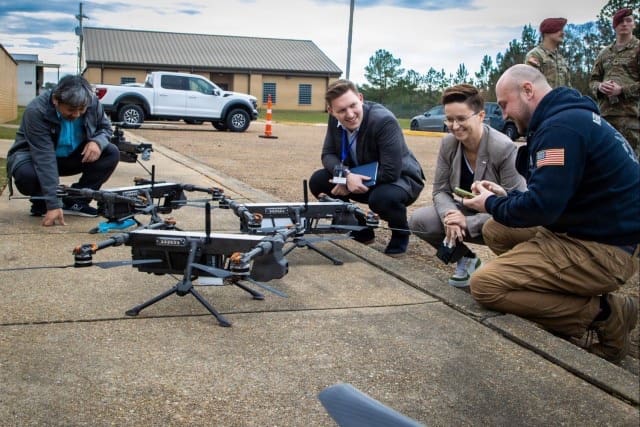
FORT POLK, La. — The Joint Readiness Training Center (JRTC) and Fort Polk just dropped a game-changer with their inaugural Innovation Industrial Conference on Jan. 14–15, pulling in top defense industry vendors and Army modernization gurus to turbocharge the Transformation in Contact (TiC) initiative. This isn’t your average trade show; it’s a high-stakes mashup aimed at injecting cutting-edge tech into JRTC’s live-fire training scenarios, where soldiers simulate the chaos of peer-level conflicts against near-peer adversaries like those in Eastern Europe or the Indo-Pacific. Think advanced optics, next-gen comms, AI-driven targeting systems, and modular weapon platforms—tools that bridge the gap between today’s training grounds and tomorrow’s battlefields. By fostering direct collab between industry heavyweights and Army innovators, JRTC is fast-tracking prototypes into real-world ops, slashing development timelines from years to months.
For the 2A community, this spells massive upside. JRTC’s TiC push mirrors the civilian firearms evolution we’ve championed for decades: modular AR platforms, red-dot sights, and suppressors born from military R&D that trickle down to everyday defenders. As the Army prioritizes lightweight, scalable systems for dismounted infantry—echoing the M4A1 SOPMOD kits and MK18 CQBRs that inspired the civilian short-barrel rifle boom—this conference accelerates tech transfer. We’re talking potential civilian access to enhanced ballistics, holographic HUDs for low-light targeting, and even drone-integrated fire control that could redefine home defense or range dominance. Critics might cry militarization, but history proves otherwise: Post-Vietnam M16 refinements fueled the AR-15 revolution, and today’s SOCOM gear populates shelves at your local gun shop. This event underscores how a strong military-industrial pipeline bolsters Second Amendment innovation, ensuring American shooters stay ahead of global threats.
The implications? Keep an eye on vendors like those peddling TiC upgrades—they’re the same players supplying LE and feeding the surplus market. Pro-2A advocates should cheer this as a win for readiness that indirectly fortifies civilian capabilities, reminding Washington that a modernized force demands a robust domestic arms industry. If JRTC’s model scales, expect a flood of battle-tested gear hitting civilian markets by 2026, proving once again that military advancement is the ultimate 2A force multiplier. Stay vigilant, patriots—this is how we win the future.


