
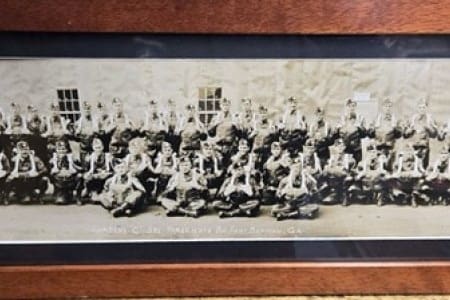
In the staid halls of military tradition, where hierarchies and doctrines calcify into unbreakable stone, visionaries like Lieutenant General William Pelham Yarborough emerge as the chisels that carve new paths. Yarborough wasn’t just a soldier; he was a perpetual innovator, blending deep respect for Army heritage with a restless drive to think outside the box. His creation of the Green Berets—America’s elite Special Forces—stemmed from this alchemy, born during the post-WWII era when conventional forces grappled with unconventional threats like guerrilla warfare and asymmetric conflicts. Yarborough saw the future: small, adaptable teams of unconventional warriors trained in languages, sabotage, psychological operations, and direct action. He didn’t beg for permission; he prototyped the beret itself, sketching its iconic headgear on a napkin and pushing it through sheer force of will. This wasn’t rebellion for its own sake—it was evolution, proving that true leadership thrives when it honors the past while forging tools for tomorrow’s battles.
What elevates Yarborough’s story beyond military lore is its uncanny parallel to the firearms industry’s own renegades, those pro-2A pioneers who defy regulatory orthodoxy to innovate under fire. Think of Eugene Stoner birthing the AR-15 platform amid Vietnam’s chaos, or the modern suppressors and modular rifles from SilencerCo and Daniel Defense—creations that echo Yarborough’s beret as symbols of adaptive lethality. Just as he challenged the Pentagon’s buttoned-up uniformity to equip Green Berets for jungle ambushes and covert ops, today’s 2A innovators battle ATF red tape and anti-gun luddites to deliver precision tools for self-defense, hunting, and yes, potential citizen militias. Yarborough’s legacy warns against complacency: in a world of rising threats—from urban unrest to foreign incursions—stagnant traditions breed vulnerability. The Green Berets succeeded because they innovated relentlessly; so must the 2A community, prototyping the next-gen firearms that keep free men free.
The implications for gun owners are profound: embrace Yarborough’s ethos or risk obsolescence. As global instability mounts—think proxy wars and domestic divisions—perpetual innovation isn’t optional; it’s survival. Support boutique manufacturers pushing piston-driven ARs, red-dot optics fused with AI assists, or lightweight polycarb frames that outpace bureaucratic bans. Yarborough didn’t wait for consensus; he built the future. 2A patriots should do the same, curating arsenals that honor the musket-bearing minutemen while arming tomorrow’s defenders. In his green beret, we see not just a hat, but a manifesto: innovate or perish.


