
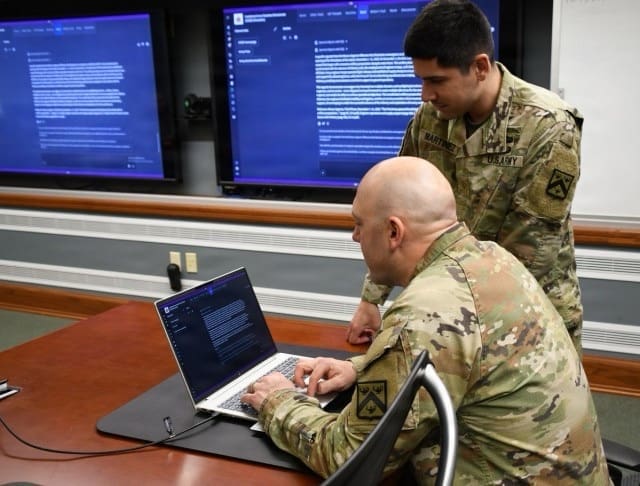
Imagine a world where military doctrine—those dense manuals that guide everything from squad tactics to large-scale operations—gets drafted in months instead of years. That’s the reality unfolding at Fort Leavenworth, where the Army’s Combined Arms Doctrine Directorate is wielding AI-powered digital tools to turbocharge the process. No more plodding through endless revisions by hand; these authors are scrutinizing workflows, slashing redundancies, and delivering razor-sharp guidance to the force faster than ever, all while upholding the gold standard of precision. It’s a quiet revolution in how the world’s most capable army codifies its edge.
For the 2A community, this isn’t just some bureaucratic tech upgrade—it’s a flashing neon sign about AI’s double-edged sword in the firearms and defense ecosystem. On the pro side, accelerated doctrine means warfighters get battle-tested knowledge quicker, potentially filtering down to civilian training paradigms through declassified insights or surplus gear innovations. Think faster evolutions in marksmanship standards or small arms handling that could inspire next-gen civilian rifle courses. But here’s the rub: AI streamlining military pubs raises eyebrows about its inevitable creep into regulatory realms. The ATF’s already dipping toes into machine learning for NFA compliance checks; what happens when feds juice up their rulemaking with similar tools? Doctrine writers promise quality holds, but algorithms trained on biased data could spit out overreaching interpretations of assault weapons or stabilizing braces, turning 2A protections into digital footnotes. Pro-2A vigilance demands we track this—AI might speed knowledge to the force, but it could also fast-track encroachments on our rights if not checked.
The implications ripple wider: as AI democratizes high-level analysis, 2A advocates gain a superpower for countering narratives. We can now parse doctrine PDFs with LLMs to unearth gems like historical justifications for individual arming, arming our debates with unassailable facts. Stay sharp, Second Amendment sentinels—this Army pivot is a wake-up call to harness the tech before it harnesses us.


