
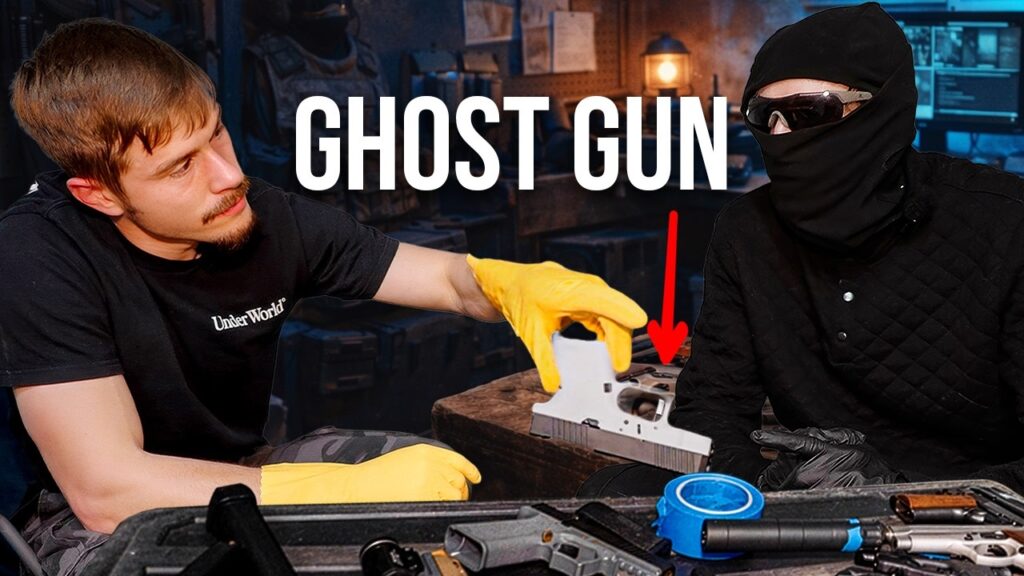
Introduction: The Evolution of Untraceable Firearms
The debate surrounding ghost guns—untraceable firearms often manufactured at home using 3D printing technology—is reshaping the landscape of American gun ownership. In this gripping documentary, popular YouTuber Tommy G takes viewers to the frontlines of this controversy. Known for his fearless, “boots-on-the-ground” journalism and immersive deep dives into American subcultures, Tommy G bypasses mainstream media narratives to get direct access to the people living the story.
From “Kia Boys” to cartel territory, Tommy G has built a reputation for gaining “seat-belt-off” access to hard-to-reach figures. In this video, he applies that signature gonzo style to the Second Amendment‘s digital evolution. He travels to the heart of the 3D-printed gun movement to interview its most notorious figures, exploring the tension between public safety concerns and the fundamental right to bear arms in an age where anyone can download a gun.
Defense Distributed: Making Guns “Invisible” to the Law
At the center of this technological revolution is Cody Wilson, the founder of Defense Distributed and the most prominent figure in the ghost gun industry. A self-described crypto-anarchist and gun rights advocate, Wilson gained international fame in 2013 after inventing “The Liberator,” the world’s first fully functional 3D printed gun.
Wilson’s philosophy is clear: access to firearms is a human right. He argues that government attempts to regulate these objects only force them to become “invisible and withdrawn.” To facilitate this, Defense Distributed manufactures the Ghost Gunner, a desktop CNC milling machine. This device allows individuals to carve firearm components from raw aluminum in the privacy of their own homes, effectively bypassing federal serialization requirements.
One of their flagship innovations, the G80 system, exemplifies this cat-and-mouse game with regulators. The G80 is an 80% finished Glock-compatible frame. Because it is not fully finished, it does not legally qualify as a firearm until the end-user completes the machining process—a distinction Wilson describes as creating objects that are “ambiguous” and “invisible to the law.”
The Legal Battleground: Michael Cargill vs. The ATF
While Wilson innovates the hardware, activists like Michael Cargill, owner of Central Texas Gunworks, are fighting the battle in the courtroom. Cargill successfully sued the ATF (Bureau of Alcohol, Tobacco, Firearms and Explosives) all the way to the Supreme Court.
Cargill’s landmark case challenged the ATF’s authority to ban bump stocks without congressional approval—a case he won. Both Cargill and Wilson share a deep concern regarding ATF overreach, arguing that federal agencies are enforcing gun laws that were never passed by Congress. This sentiment reflects a broader pushback against what they view as unconstitutional infringements on gun owners’ rights.
The Underground: Inside the World of DIY 3D Gun Printing
The documentary also shines a light on the “two-tiered justice system” of the firearms world. While major weapon manufacturers operate openly, making billions, individual hobbyists and 3D gun printers often face severe legal risks.
An anonymous printer featured in the video reveals the reality of this underground network. After receiving a cease and desist order from the ATF, he turned to 3D printing as an act of defiance. He demonstrates that possessing digital pistol schematic files and manufacturing a gun for personal use is generally legal in many jurisdictions. However, selling those homemade firearms is strictly prohibited.
This disparity fuels the narrative that the law targets individuals while protecting corporate giants, further radicalizing the DIY gun community.
Conclusion: The Freedom to Manufacture
Ultimately, the rise of Defense Distributed and the proliferation of ghost guns underscores a shift in how the Second Amendment is exercised. For advocates like Cody Wilson and Michael Cargill, the freedom to manufacture one’s own firearms for self-protection is not just a legal loophole—it is an essential liberty.
As technology advances, the line between information and manufacturing continues to blur, making the total regulation of firearms increasingly difficult, if not impossible.
Key Takeaways (FAQ)
• What is a Ghost Gun? A firearm that lacks a serial number, often made at home using 3D printers or milling machines like the Ghost Gunner.
• Who is Cody Wilson? The founder of Defense Distributed and creator of “The Liberator,” the first 3D printed gun.
• Is it legal to 3D print a gun? Under federal law, it is generally legal to manufacture a firearm for personal use, provided the individual is not prohibited from owning guns. However, selling homemade guns without a license is illegal, and state laws vary significantly.


