
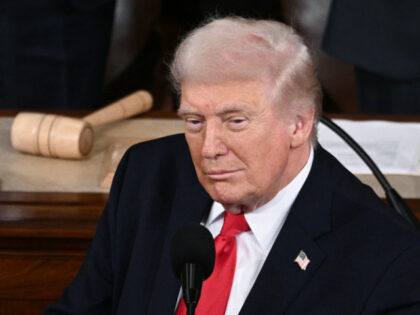
President Trump’s bold SOTU declaration that tariffs—explicitly paid for by foreign countries—could one day supplant the income tax system isn’t just economic bravado; it’s a seismic shift in fiscal philosophy with profound ripple effects for the Second Amendment community. Imagine a world where the IRS’s sprawling bureaucracy, which gobbles up billions in enforcement costs (over $14 billion annually per recent Treasury data), shrinks dramatically as revenue streams pivot to border duties on imports. Trump envisions tariffs as a user fee on foreign goods flooding our markets, protecting American workers and manufacturers without picking American pockets directly. Economically, this echoes historical precedents like the Tariff Act of 1789, which funded 90% of the early U.S. government before the 16th Amendment ushered in income taxes in 1913. Critics cry regressive, but proponents, including economists like Peter Navarro, argue it incentivizes domestic production, potentially slashing consumer prices long-term as supply chains reshore.
For 2A patriots, this is manna from heaven. The $1.8 trillion income tax haul finances a federal leviathan that’s increasingly hostile to gun rights—think ATF’s pistol brace crackdowns, bloated NFA bureaucracy, and billions funneled to anti-gun NGOs via grants. Tariffs could starve that beast: less revenue means less for executive overreach, forcing Congress to prioritize core functions over gun-grabber wish lists. Data backs it—pre-income tax America had robust gun cultures with minimal federal meddling, and states handled their own affairs. If tariffs replace even half of income taxes (a plausible ramp-up per Trump’s framing), we’re talking hundreds of billions redirected from D.C. swamp creatures to border security and manufacturing revival, bolstering the industrial base for firearms production. Companies like Sig Sauer and Ruger, already U.S.-centric, thrive under protectionism, shielding them from cheap Chinese knockoffs that undercut American innovation.
The implications? A leaner government is a freer one—less cash for red-flag laws or assault weapon registries, more focus on real threats like cartel gun smuggling across tariff-free borders. Trump’s not naive; he knows foreign entities like China absorb much of the cost (studies from the National Bureau of Economic Research show U.S. importers eat only 20-40% of tariff hikes). This isn’t pie-in-the-sky; it’s a strategic pivot reclaiming sovereignty, echoing Reagan-era supply-siders who dreamed of tax abolition. 2A warriors should cheer: tariffs fortify the economic arsenal, ensuring the Second Amendment endures not by charity, but by starving the tyrants who envy it. Game on.


