
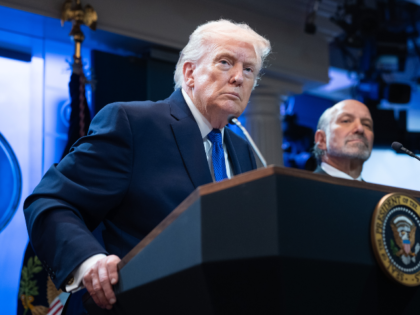
President Trump just dropped a bombshell on global trade, slapping a 10% tariff on imports from everywhere—stacked right on top of existing duties—after the Supreme Court smacked down his previous emergency powers tariffs under the International Emergency Economic Powers Act (IEEPA). This isn’t Trump backing down; it’s a slick pivot, dodging the Court’s ruling by leaning on standard trade authorities like Section 301 of the Trade Act. The move signals he’s not letting judicial pushback derail his America First agenda, especially as he ramps up for another term amid whispers of economic warfare with China and beyond. Smart play? Absolutely—it’s a reminder that presidents have toolkits beyond emergency declarations, and this one keeps the pressure on without testing constitutional limits again.
For the 2A community, this tariff gambit hits closer to home than you might think. Firearms manufacturing has long been a domestic stronghold, with AR-15 parts, suppressors, and optics often sourced from overseas cheap labor—think Chinese aluminum receivers or Turkish barrels flooding the market and undercutting U.S. makers like Daniel Defense or BCM. Trump’s blanket 10% hike could supercharge Buy American in the gun world, making imported components pricier and giving homegrown innovators a real edge. We’ve seen this before: his first-term steel tariffs boosted U.S. mills, stabilizing supply chains for rifle frames and armor plating. Implications? Expect AR builds to cost a bit more short-term, but long-term, it fortifies our industrial base against foreign dependency—critical for a Second Amendment ecosystem that thrives on self-reliance, not Beijing’s supply lines. If paired with pro-2A policies, this could be the economic moat our community needs to outpace globalist undercutters.
The ripple effects extend to ammo and accessories too, where imported primers and brass have kept prices volatile. By making foreign goods less competitive, Trump’s tariff wall incentivizes domestic production ramps—like Hornady or Federal expanding stateside ops—potentially stabilizing costs and shortening lead times for the everyday shooter. Critics will cry inflation, but for 2A patriots, it’s a strategic win: less reliance on adversarial nations means a more resilient gun culture, ready for whatever comes. Keep an eye on how this evolves—Congress might tweak it, but for now, it’s Trump flexing trade muscle to build the fortified America we all want. Stock up on U.S.-made where you can; the future’s looking domestically dominant.


