

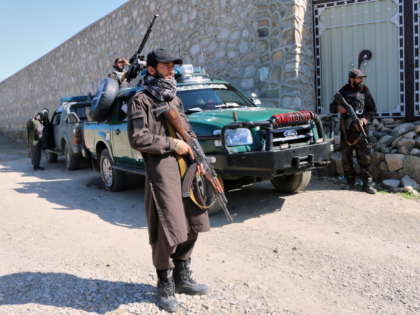
Taliban spokesmen aren’t exactly household names in the pro-2A world, but when a battle-hardened jihadist outfit like the Afghan insurgents starts calling out Iran’s relentless missile barrages on Sunni Arab neighbors—labeling it not fair and a concern for regional stability—you know the Middle East powder keg is fizzing hotter than a suppressed AR-15 barrel. This isn’t just another tribal squabble; it’s the Taliban, fresh off their U.S.-funded victory lap in 2021, drawing a line against Tehran’s proxy aggression toward places like Saudi Arabia and the UAE. Iran’s been lobbing hypersonic threats and drones at these Gulf monarchies for years, framing it as payback for everything from oil politics to Israeli alliances, but Kabul’s rebuke underscores a rare Sunni-Shia fracture that’s got even the most isolationist observers perking up. Why does this matter? Because it exposes the fragility of allied terror networks that the Biden-Harris admin once hoped could be managed through backchannel deals—think the $6 billion cash infusion to Iran that vanished into the ether, only to fuel more rockets.
Peel back the layers, and this Taliban clapback is a masterclass in realpolitik hypocrisy: these are the same guys who hosted al-Qaeda pre-9/11 and still stone women for morality crimes, yet they’re suddenly the voice of restraint against Persian imperialism. It’s a reminder that Islamist unity is a myth when power and turf are at stake—Iran’s bombing campaigns have killed hundreds in Yemen, Iraq, and beyond, often with U.S.-tech components traced back to lax export controls. For the 2A community, the implications hit home hard: America’s endless Middle East entanglements keep funneling billions into arms races that dwarf our domestic ammo shortages. Every dollar propping up Gulf defenses or Iranian proxies is a dollar not defending the Second Amendment at home, where ATF overreach and import bans choke our supply chains. Imagine if that foreign aid cash stayed stateside—funding range expansions instead of Raytheon contracts.
The bigger picture? This rift signals potential blowback for U.S. gun owners if escalation spirals. Iran’s arsenal, bolstered by smuggled tech and Chinese knockoffs, mirrors the global black market that floods cartel weapons south of the border—cheap AKs and RPGs that make our border crisis a live-fire exercise. Pro-2A patriots should watch closely: a Taliban-Iran feud could fracture Hezbollah funding, easing pressure on Israel and maybe even stabilizing oil prices to keep our reloading presses humming. But it also risks a wider war drawing in U.S. forces again, eroding the isolationism that lets us focus on SCOTUS wins like Bruen. Stay vigilant, stock brass, and train like the world’s watching—because in geopolitics, as in the range, weakness invites the boom.


