
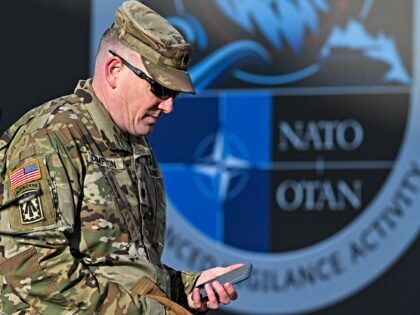
Admiral Pierre Vandier, NATO’s Supreme Allied Commander for Transformation, didn’t mince words in his Bloomberg interview this week: Europe has spent decades as the free riders of their own security, coasting on America’s military might post-Cold War. With Russia’s shadow looming larger than ever, he’s calling for a serious ramp-up in European defense spending and capabilities. It’s a stark admission from a top alliance brass, underscoring how the continent’s complacency—fueled by slashed budgets and outsourced deterrence—left them vulnerable when Putin rattled his saber over Ukraine.
This isn’t just NATO drama; it’s a wake-up call with direct ripples for the 2A community. Europe’s free-riding era meant relying on U.S. taxpayers to foot the bill for everything from F-35s to forward-deployed troops, while their own militaries atrophied into hollow forces. Fast-forward to today: nations like Germany are scrambling to rebuild stockpiles, but they’re starting from a deficit of basic ammo and small arms proficiency. Contrast that with America’s robust civilian firearms culture, where millions of armed citizens form a de facto national reserve—trained, equipped, and ready without waiting for government largesse. Vandier’s plea highlights the 2A’s strategic edge: decentralized, resilient defense that no bureaucracy can match. Europe’s pivot could mean more transatlantic pressure on U.S. resources, but it also validates why our Founders enshrined the right to bear arms—not as a hobby, but as the ultimate backstop against free-rider fragility.
The implications? As Europe ramps up, watch for U.S. gunmakers like SIG Sauer and Remington to see export booms, arming NATO allies who suddenly need what American civilians have mastered: personal firepower. For 2A advocates, it’s vindication—our system isn’t backward; it’s battle-tested insurance against the very dependency Vandier laments. Time for Europe to catch up, and for us to double down on keeping America the arsenal of free peoples.


