
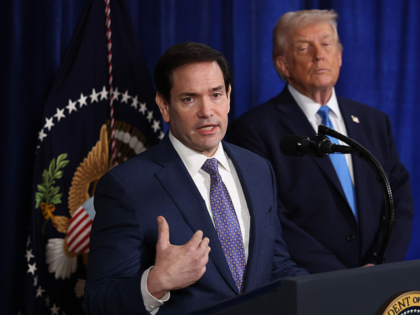
Secretary of State Marco Rubio just dropped a bombshell essay that’s music to the ears of anyone who gets why America’s nuclear arsenal isn’t just a relic of the Cold War—it’s the ultimate backstop for our sovereignty. In no uncertain terms, Rubio declares that President Trump’s administration won’t chase a bilateral nuclear arms deal with Russia alone, slamming China’s rapid and opaque nuclear buildup as the reason such pacts are now obsolete. This isn’t diplomatic posturing; it’s a clear-eyed rejection of the outdated New START mindset, where the U.S. and Russia slash stockpiles while Beijing races ahead unchecked, potentially hitting 1,000 warheads by 2030 according to Pentagon estimates. Rubio’s stance recognizes that arms control without China on board is like playing chess with one hand tied—strategic suicide in a multipolar world where hypersonic missiles and silo fields in the Gobi Desert are rewriting the rules.
For the 2A community, this is a masterclass in deterrence doctrine that mirrors our fight for self-defense rights. Just as Rubio argues that ignoring China’s buildup leaves America vulnerable to coercion, gun grabbers push bilateral deals like assault weapon bans that disarm only law-abiding Americans while cartels and tyrants arm up unchecked. The parallel is stark: nuclear parity demands multilateral realism, not unilateral restraint, much like how blanket restrictions on AR-15s or standard-capacity mags empower aggressors abroad who flood black markets with AKs. Rubio’s essay implicitly bolsters the case for robust Second Amendment protections as a domestic layer of national resilience—armed citizens as the ultimate asymmetric deterrent against both foreign invasion fantasies and domestic overreach.
The implications ripple far: expect Trump 2.0 to prioritize modernization of the U.S. triad (subs, bombers, ICBMs) over feel-good treaties, freeing up resources for broader defense priorities that could include bolstering civilian marksmanship programs or easing suppressor regs under the Hearing Protection Act revival. This isn’t just foreign policy; it’s a pro-2A signal that strength at the top cascades down. China’s opacity demands transparency through strength—on the world stage and at home, where the right to keep and bear arms ensures no government monopoly on force. 2A patriots, take note: Rubio’s laying the groundwork for an era where deterrence isn’t negotiated away.


