
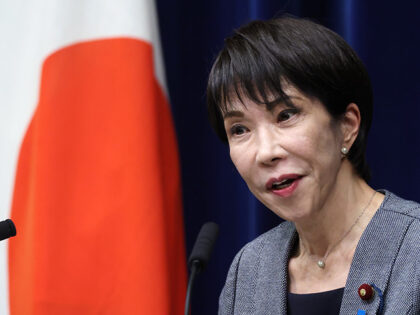
Japanese Prime Minister Sanae Takaichi’s bold move to dissolve the lower house and call snap elections on February 8—jumping the gun by over three years on the scheduled October 2028 vote—signals confidence amid her skyrocketing popularity. Fresh off assuming the premiership, Takaichi, a hawkish conservative with deep ties to Japan’s right-wing establishment, is capitalizing on a wave of public support fueled by her unapologetic stance on national security and economic revival. This isn’t just domestic political theater; it’s a high-stakes gamble in a nation where gun ownership is virtually nonexistent, thanks to post-WWII reforms that turned the once-samurai empire into a model of strict civilian disarmament.
For the 2A community, Takaichi’s ascent is a double-edged katana. On one hand, her vocal advocacy for remilitarization—pushing to revise Article 9 of Japan’s pacifist constitution and bolstering the Self-Defense Forces—echoes the self-reliance ethos at the heart of American gun rights. She’s no fan of dependency on foreign protectors like the U.S., and her snap election could accelerate Japan’s shift toward a more armed, assertive posture, potentially validating arguments that armed societies deter aggression. Imagine the ripple effects: a rearmed Japan might pressure allies to rethink disarmament narratives, indirectly bolstering global pro-2A momentum by exposing the fragility of gun-free utopias in a volatile Indo-Pacific. Yet, the flip side stings—Takaichi’s conservative roots run deep in Japan’s collectivist culture, where individual firearm rights remain taboo, framed as relics of a chaotic past. Her win could entrench this status quo, serving as ammo for anti-2A advocates who point to Japan’s ultra-low crime rates (0.02 homicides per 100,000) as proof that bans work, ignoring the homogeneous society and cultural homogeneity that truly drive those stats.
The implications extend to U.S. politics too. With Takaichi’s LDP likely dominating the polls, a stronger Japan could ease burdens on American forces, freeing up resources for domestic priorities like border security—priorities that dovetail with 2A strongholds. Pro-gunners should watch closely: her success might inspire confidence elections stateside, where leaders call bold shots to harness populist surges. But let’s be real—if Japan ever flirts with civilian arms (a long shot under her watch), it’d be a seismic win for the cause, proving that even the most disarmed nations can rediscover sovereignty. Eyes on February 8; this could reshape alliances and armaments debates for years.


