

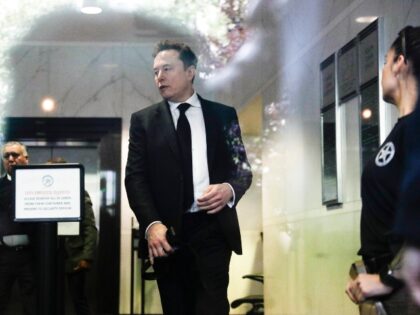
Elon Musk’s courtroom showdown with Sam Altman and Greg Brockman isn’t just a billionaire brawl over OpenAI’s soul—it’s a high-stakes clash exposing the raw underbelly of Big Tech’s power grabs, where founding promises of open-source AI for humanity’s benefit are allegedly being hijacked for profit. Musk, who co-founded OpenAI in 2015 as a nonprofit counterweight to profit-driven AI monopolies, testified Tuesday in San Francisco federal court, blasting the company’s pivot to a capped-profit model under Altman’s Microsoft-backed regime. It’s not okay to steal a charity, Musk declared, framing OpenAI’s transformation as a betrayal that locks revolutionary tech behind closed doors. With OpenAI now valued at $150 billion and churning out tools like ChatGPT, Musk’s lawsuit demands they revert to their original mission or dissolve, arguing that Altman’s crew breached foundational agreements to keep AI development transparent and accessible.
This trial’s ripples extend far beyond Silicon Valley boardrooms, striking at the heart of innovation gatekeeping that should alarm every pro-2A advocate. Just as the Second Amendment enshrines the right to self-reliant defense against centralized tyranny—be it government overreach or corporate overlords—Musk’s fight embodies resistance to elite control over transformative tech. Imagine if firearm designs or 3D-printing blueprints for AR-15 lowers were stolen from public domain into proprietary vaults by ATF cronies or defense contractors; we’d call it confiscation. OpenAI’s shift mirrors that, potentially handing AI superintelligence to a Microsoft-OpenAI cartel, where access is doled out by algorithm overlords who could censor or restrict tools for decentralized manufacturing, home defense innovations, or even predictive modeling for range safety. Musk’s stand isn’t just about code—it’s a proxy war for keeping breakthrough tech in the hands of the people, not the powerful.
The implications for the 2A community are profound: if Musk prevails, it could set precedents dismantling nonprofit-to-profit shell games, emboldening challenges to regulatory captures in firearms tech, like ghost gun bans or AI-driven ATF tracking. A loss, however, greenlights the Altman model, where tomorrow’s AI could flag unapproved ammo reloads or flag 3D-printed suppressors before they’re even printed. Watch this trial like it’s the Heller of AI rights—because in a world where code is the new lead, open access is our loaded magazine. Stay tuned; the verdict could arm or disarm the future of freedom.


