
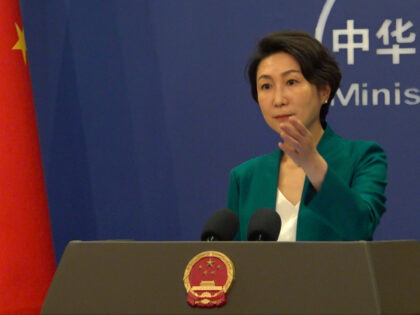
China’s Foreign Ministry just served up a masterclass in diplomatic dodgeball, condemning U.S. strikes on Iranian nuclear sites while artfully sidestepping any pledge of military muscle or a U.N. Security Council veto to shield Tehran. During Monday and Tuesday’s press briefings, spokespeople like Lin Jian parroted the usual Beijing playbook—lambasting hegemonic American aggression and calling for restraint—without uttering a single syllable about boots on the ground, arms shipments, or blocking resolutions. It’s the kind of calculated ambiguity that keeps Iran’s ayatollahs hanging on a thread of cold comfort, as the headline nails it perfectly. This isn’t oversight; it’s strategy. China, Iran’s top oil buyer and a key player in its shadow economy, knows full well that escalating to direct confrontation risks its own economic lifelines, especially with U.S. naval assets dominating the Strait of Hormuz.
For the 2A community, this geopolitical chess move underscores a timeless truth: when superpowers play coy with tyrants, it’s the armed citizenry back home that becomes the ultimate backstop. Iran’s regime, emboldened by years of proxy wars and nuclear brinkmanship, has long armed itself through backchannels like those greased by Chinese tech and components—think drone swarms and missile guidance systems that mirror threats we face from narco-cartels south of the border. Beijing’s non-commitment signals potential fractures in the axis of autocrats, buying time for U.S. forces to degrade Iran’s capabilities without a full-blown World War III. But here’s the 2A angle: it reminds us why the Founders enshrined the right to keep and bear arms. In an era of unreliable alliances and hesitant giants, a well-regulated militia isn’t just historical poetry—it’s insurance against the fallout from emboldened regimes exporting chaos. If China won’t draw a line, every red-blooded American should double down on theirs, stocking mags and staying vigilant as Middle East tensions ripple toward our shores.
The implications ripple wider still. With China prioritizing its Taiwan timeline and domestic stability over an Iranian quagmire, we might see Tehran more isolated, forcing it to lean harder on Hezbollah and Houthis—groups already testing U.S. resolve with ballistic barrages. For gun owners, this is a clarion call to advocate fiercely for policies that fortify our southern border and Second Amendment sanctuaries, ensuring we’re not caught flat-footed if proxy conflicts go hot. History’s littered with examples of great powers abandoning proxies (ask Saddam about that), leaving armed populaces as the deciders. Stay frosty, patriots—China’s chill toward Iran is our cue to heat up the range time.


