
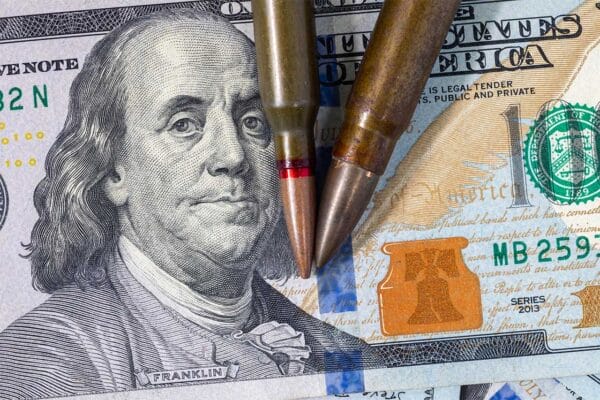
JPMorgan Chase, one of the world’s largest banks with trillions in assets, just threw open its doors to the firearm industry—specifically ending its notorious policy that denied banking services to manufacturers of Modern Sporting Rifles (MSRs). This seismic shift came after high-level meetings with the National Shooting Sports Foundation (NSSF), the trade group representing the shooting sports industry. In a letter obtained by industry insiders, JPMorgan acknowledged that its previous restrictions were unsustainable, committing to fair access to banking services without discriminating against legal firearm businesses. This isn’t just a quiet policy tweak; it’s a major retreat from the de-banking crusade that Wall Street waged against 2A companies for years.
For context, JPMorgan’s reversal mirrors recent capitulations by Bank of America and Citigroup, who similarly dialed back their anti-gun stances after facing NSSF pressure and market realities. Remember, these banks weren’t just denying loans or accounts—they were effectively trying to starve the industry of oxygen by cutting off payment processing, merchant services, and basic financial plumbing. This was part of a broader ESG (Environmental, Social, Governance) playbook pushed by activist investors and left-leaning regulators, aiming to make it impossible for AR-15 makers and ammo producers to operate. But here’s the clever bit: these policies weren’t rooted in risk assessment (firearm companies have stellar credit profiles and low default rates) but in virtue-signaling. JPMorgan’s about-face exposes the fragility of that strategy—when pro-2A lawmakers, consumer boycotts, and shareholder pushback mount, even behemoths buckle.
The implications for the 2A community are huge: normalized banking access means manufacturers can scale up, innovate, and compete without the constant threat of financial sabotage. It weakens the gun controllers’ playbook, proving that targeted advocacy works. Expect ripple effects—other banks like Wells Fargo or Goldman Sachs might follow suit to avoid isolation. For gun owners, this is a win for self-defense rights and economic freedom; it reaffirms that the industry, which generates $80+ billion annually and supports millions of jobs, isn’t going anywhere. Stay vigilant, though—the war on the Second Amendment shifts battlegrounds, but victories like this build momentum. Firearms freedom just got a big financial boost.


