

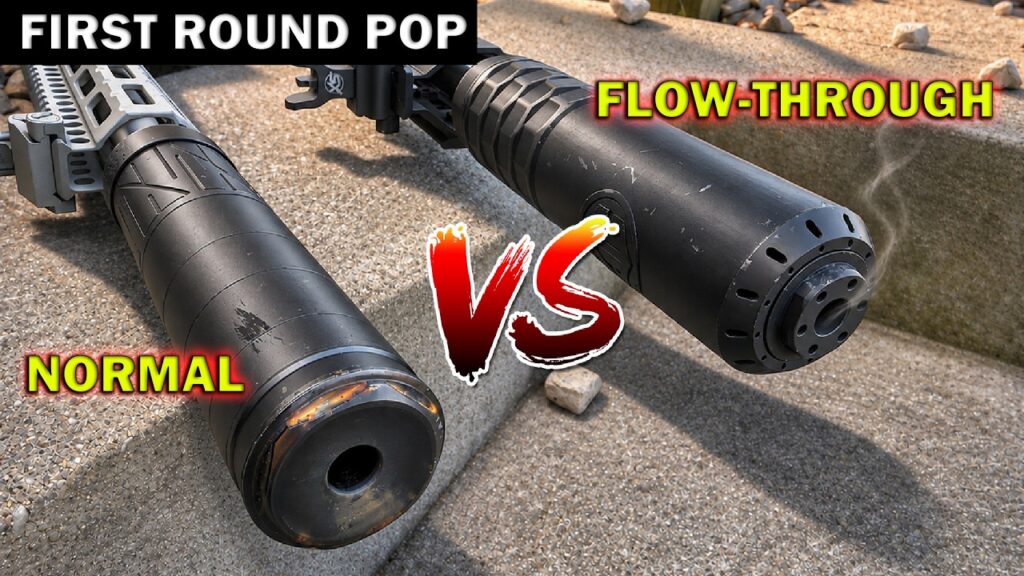
First-round pop is the extra loud report when a suppressor still holds ambient oxygen. On the first shot that oxygen can ignite; later shots are quieter once combustion gases fill the can. Host Kurt of The VSO Gun Channel tested whether traditional baffle stacks or flow-through designs hold that “gassed” atmosphere longer, then showed an end-user process that can mute the pop overnight.
The test
A channel poll favored flow-through 2-to-1 for mitigating first-round pop. Kurt called that a trick question driven by marketing. “There is almost nothing that you can do from the manufacturing standpoint to eliminate first round pop,” he said, aside from sealed wipe cans that hurt accuracy. After gassing both types, he let them sit. At about 10 minutes neither showed a clear extra pop. At 30 minutes the traditional can stayed quieter; the flow-through unit popped again. Overnight, both returned to first-round pop unless treated. Flow-through stacks are built with extra gas paths, so they leak atmosphere faster: “They are designed by their nature to leak.”
Pros, cons, and process
- Traditional: Air mostly has to leave through the central channel, so the gassed atmosphere lasts longer in this demo.
- Flow-through: Extra communication through the baffles; often more expensive; some host guns run poorly with them.
- Wipe/sealed cans: Can trap combustion products but sacrifice accuracy as the bullet hits wipes.
- User method: A tablespoon of water (or similar ablative) in the blast chamber, stored muzzle-down or on its side, wets the atmosphere and soaks energy that would otherwise ignite oxygen.
Water is “most effective with traditional suppressors.” Do not use it on high-pressure loads or cheap aluminum 5.56-class cans: ablative material can spike pressure and damage weak tubes. Too much liquid dirties the can faster and can suck back into the action. After a few shots the can is gassed again; leftover moisture can extend the effect. “Everything is a trade-off. There is no free lunch.”