

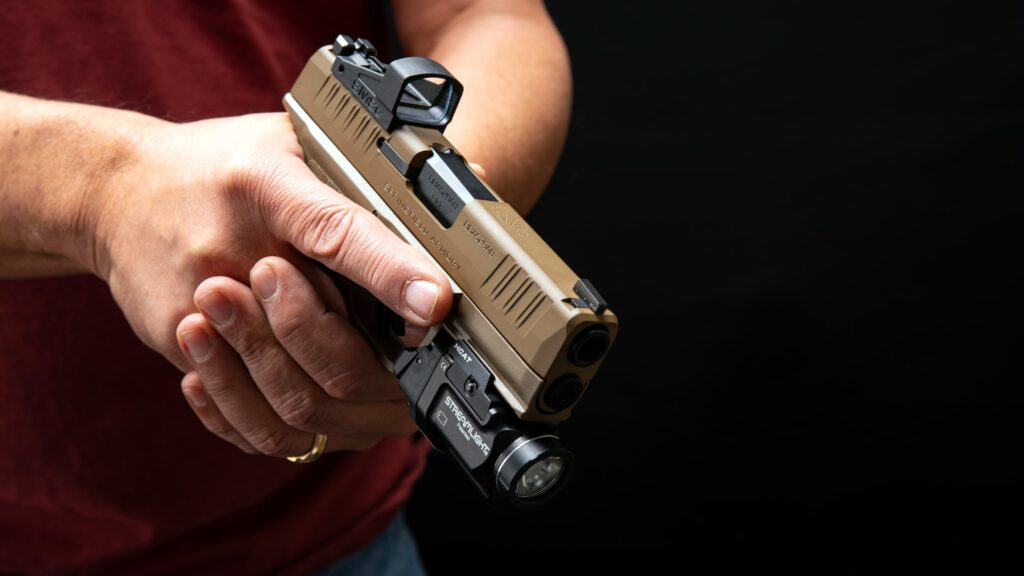
White light-laser combos have long been the red-headed stepchild of the tactical accessory world—dismissed by some as a compromise that does neither job particularly well—yet the market keeps voting with its dollars. The real story isn’t whether the combo is “wrong,” but how dramatically the technology has improved: modern LEDs now push 1,000-plus lumens in a package smaller than yesterday’s 200-lumen lights, while green or IR lasers have shrunk to true co-witness footprints that don’t shift zero after a few hundred rounds. For the 2A community this matters because it collapses two mission-critical tools into one rail slot, preserving modularity on pistols and rifles already crowded with optics, suppressors, and backup sights—an especially valuable edge for concealed-carry permit holders and home-defense setups where every ounce and inch counts.
What the piece quietly underscores is a broader shift in how everyday carriers and competition shooters think about low-light engagements. Ten years ago the debate was “light or laser”; today the question is which integrated unit best survives holster draw, suppressor back-pressure, and the inevitable bumps of daily life while still delivering both a daylight-visible aiming point and enough spill to identify threats. That evolution rewards manufacturers who treat the combo as a single system rather than two gadgets duct-taped together, and it pressures states still flirting with laser restrictions to justify rules written for 1990s tech. In short, the combo isn’t a fad—it’s the logical endpoint of miniaturization meeting real-world carry constraints, and the 2A community’s continued embrace of it is another quiet reminder that rights exercised drive product innovation faster than any regulation can throttle it.


