

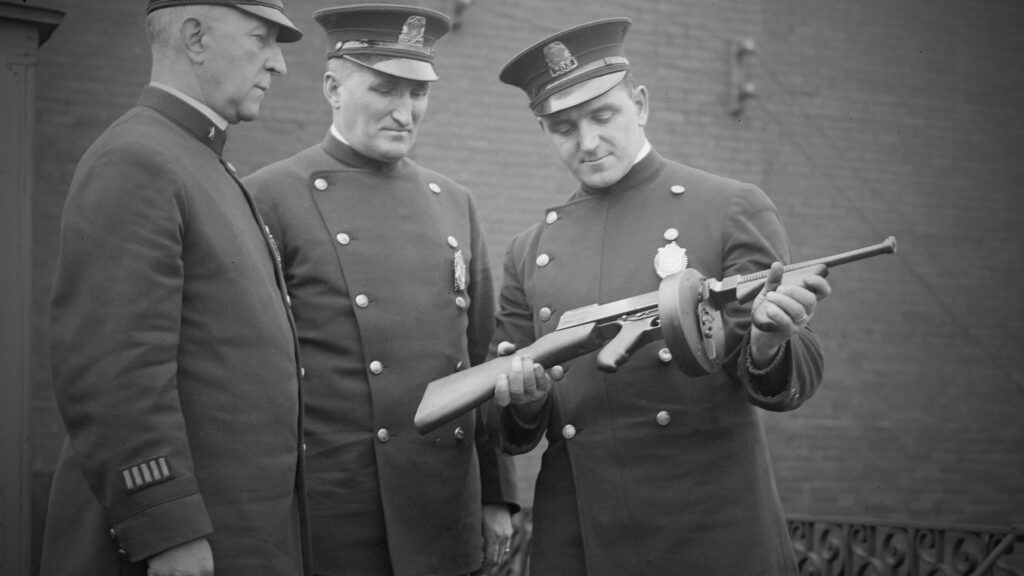
, born in the aftermath of the First World War, remains one of the most recognizable icons in American firearms history, and its story still resonates with today’s Second Amendment community. Designed by General John T. Thompson to give the U.S. military a portable “trench broom,” the weapon arrived too late for the Great War but quickly found a second life in the Roaring Twenties—both in the hands of law-enforcement and, more infamously, in the arms of Prohibition-era gangsters. That dual legacy is precisely why the Thompson endures: it embodies the uneasy truth that the same technology can serve lawful self-defense or criminal mayhem, a tension the Founders themselves understood when they enshrined an individual right to keep and bear arms.
What makes the Thompson especially instructive for modern gun owners is how its legal journey mirrors the cyclical nature of gun-control politics. Initially sold over-the-counter with little restriction, the gun became a political target after the Saint Valentine’s Day Massacre; the 1934 National Firearms Act effectively priced most civilians out of new Thompsons by levying a $200 tax—roughly $4,500 in today’s dollars. Yet the underlying right never vanished. Even at the height of the NFA’s restrictions, the Second Amendment community preserved the institutional knowledge, manufacturing skill, and legal precedent that later allowed semi-automatic carbines and civilian-legal descendants to flourish once the political climate shifted. In other words, the Thompson didn’t just survive an early attempt at prohibition; it helped prove that restrictive taxation could be endured, litigated, and eventually mitigated.
For today’s 2A advocates, the Thompson’s tale is both a warning and a rallying point. It reminds us that culture, media imagery, and high-profile crime can quickly turn yesterday’s lawful firearm into tomorrow’s contraband. At the same time, it demonstrates the resilience of America’s gun culture: even after the most sweeping federal gun law in the nation’s history, Thompsons remained in private hands, were passed down through families, and eventually became legally transferrable Title II weapons under a regulated but stable market. The lesson is clear—rights unexercised can fade, but rights defended, studied, and responsibly transmitted to the next generation can outlast political storms.


