

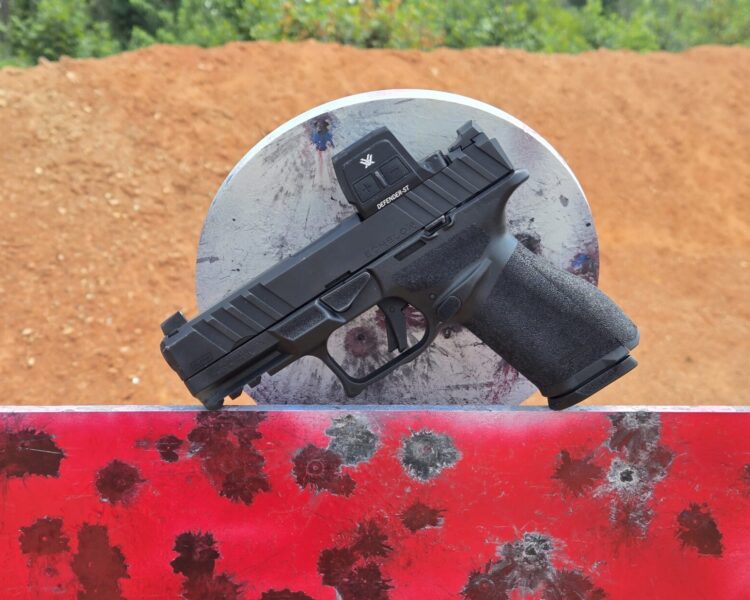
The Springfield Armory Echelon Alpha isn’t just another striker-fired pistol—it’s a deliberate middle finger to the notion that American gunmakers can’t out-engineer their European and Asian competitors on the first try. What stands out in this range report isn’t the absence of malfunctions after hundreds of rounds; it’s the shooter’s almost comic frustration at being denied an excuse to dislike the gun. That tells you everything about where the Echelon sits in today’s market: it arrived with the kind of out-of-box reliability that used to require aftermarket polishing, custom springs, and a gunsmith’s bench. For a company that spent decades living in the shadow of its 1911 heritage, this is Springfield saying the modern defensive pistol isn’t a niche product anymore—it’s the main event.
That reliability carries weight beyond one shooter’s bruised ego. In an era when some states treat magazine capacity and feature bans like a game of regulatory whack-a-mole, a pistol that simply runs means owners spend less time troubleshooting and more time training. The Echelon’s modularity—optic-ready, interchangeable grip modules, and a chassis that invites future updates—also hands the 2A community a platform that can evolve without waiting for legislators to catch up. When a gun works this cleanly from the factory, it lowers the barrier for new shooters who might otherwise get discouraged by constant stoppages, and it gives experienced carriers one less variable to worry about when seconds count.
The deeper implication is cultural. Every time a domestic manufacturer delivers a duty-grade pistol that refuses to hiccup, it undercuts the tired argument that only imported “wonder nines” are worth serious consideration. Springfield didn’t just build a gun that runs; they built one that makes the case for American innovation in the defensive handgun space. For the 2A community, that’s not just good hardware—it’s ammunition in the broader fight to prove that rights and results aren’t mutually exclusive.


